

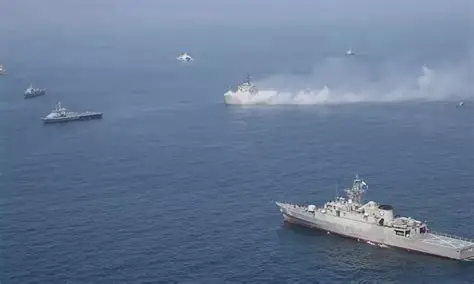
Washington/Tehran (Rajeev Sharma)— The escalating conflict in West Asia reached a perilous new height on Wednesday, March 4, 2026, after a United States missile strike on an Iranian warship in the Gulf region reportedly killed at least 80 personnel. The strike, which targeted a vessel identified as a significant asset in Iran’s naval operations, marks a direct military confrontation that threatens to pull the entire region into a full-scale maritime war.
According to reports from various sources, the U.S. operation was conducted in response to what the Pentagon described as “imminent threats” to international shipping lanes and American naval assets in the area. The strike follows days of heightened tension after the February 28 assassination of Iranian Supreme Leader Ayatollah Ali Khamenei. While U.S. officials maintain that the strike was a precision move intended to neutralize offensive capabilities, Iranian state media has condemned the act as a “cowardly aggression” and a violation of international maritime boundaries, vowing a “crushing response” to the loss of life.
The destruction of the warship and the resulting high casualty count have sent shockwaves through global markets, with Brent crude prices surging past $82 per barrel as traders fear a total blockade of the Strait of Hormuz. International leaders, including Canadian Prime Minister Mark Carney and various G7 counterparts, have issued urgent calls for de-escalation, warning that the failure of diplomatic channels is rapidly leading to an uncontrollable regional catastrophe. As both Washington and Tehran bolster their military presence in the Gulf, the international community remains on high alert for further retaliatory strikes that could redefine the security landscape of the Middle East
