

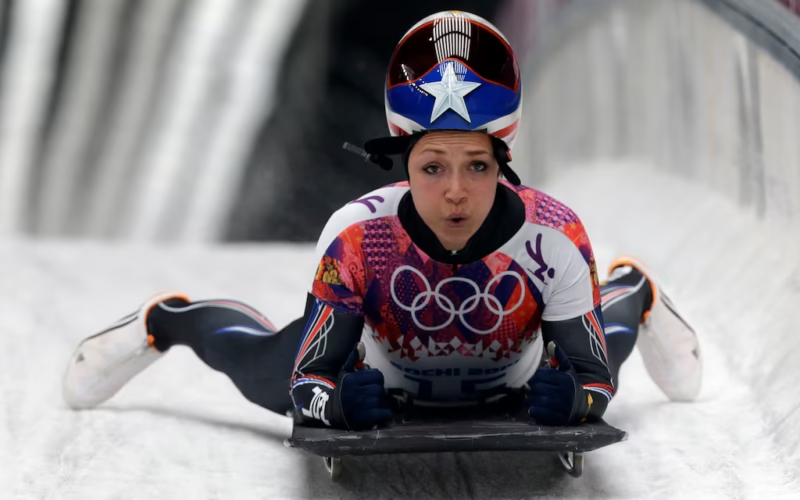
New York/Toronto (Rajeev Sharma): Sporting tensions between the United States and Canada have flared again as the Winter Olympics draw closer, this time over allegations surrounding an Olympic qualification event in skeleton racing.
Katie Uhlaender, a five-time U.S. Olympic skeleton athlete, has accused the Canadian team of manipulating a qualifying race to block her path to the Milan-Cortina Winter Games next month. The dispute centres on a North American Cup event held over the weekend in Lake Placid, New York.
Uhlaender claims Canada deliberately withdrew four of its six competitors shortly before the race, reducing the total field to fewer than 21 athletes. Under qualification rules, smaller fields result in fewer ranking points being awarded, which Uhlaender says prevented American athletes from closing the gap in the Olympic standings.
According to Uhlaender, the decision was a calculated move designed to protect Canada’s Olympic quota and ensure Canadian slider Jane Channell secured her place at the Games. She alleges that Canada’s head skeleton coach, Joe Cecchini, told her directly about the plan.
“I was devastated,” Uhlaender said in an interview with DW. “My Olympic dream ended not because I didn’t perform, but because the system was manipulated.”
Uhlaender won the Lake Placid race, but the reduced points available meant the 41-year-old fell short of qualifying for the Olympics. A world champion in 2012, her strongest Olympic performance came in 2014, when she finished fourth in Sochi.
The controversy has prompted coaches from the United States, Denmark, Israel and Malta to submit a joint letter to the International Olympic Committee, raising what they described as “serious concerns” about the fairness and integrity of the qualification process.
Bobsleigh Canada Skeleton rejected the allegations in a statement, saying the withdrawals were made for athlete welfare reasons after several competitors had raced multiple times earlier in the week. The organization said the decision was “appropriate, transparent and aligned with the integrity of the sport.”
Uhlaender disputes that explanation, arguing the timing of the withdrawals was key. She claims Canadian athletes were pulled only after all competitors had registered, creating the appearance of a full field while ensuring fewer points would ultimately be awarded.
The incident comes amid a broader backdrop of heightened rivalry between Canada and the United States, with recent sporting clashes reflecting wider political and economic tensions. With the Milan-Cortina Winter Olympics approaching, the skeleton dispute has added another layer of controversy to an already strained cross-border sporting relationship.
