

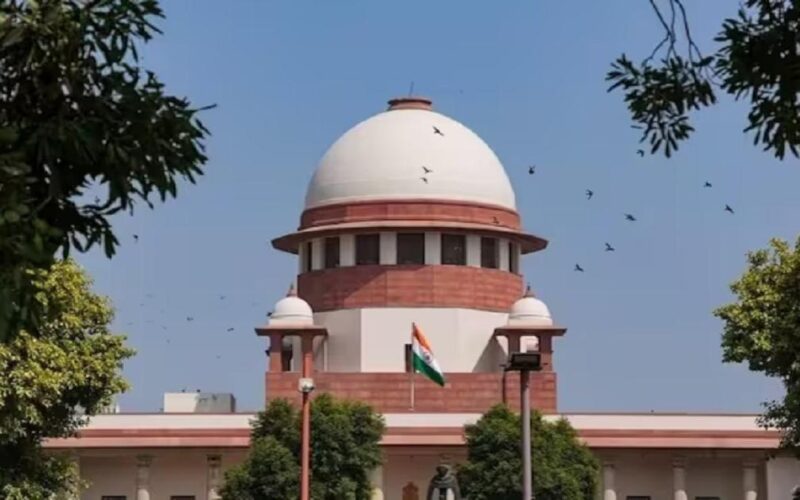
New Delhi (Rajeev Sharma): The Supreme Court on Monday declined to release activists Umar Khalid and Sharjeel Imam on bail in the case linked to the 2020 communal violence in Delhi, which left dozens dead and hundreds injured.
A two-judge bench led by Justice Aravind Kumar and Justice N.V. Anjaria announced the decision after having reserved its order earlier this month. The ruling applies to bail petitions filed by seven accused persons who are alleged to have been involved in a broader conspiracy behind the violence.
Apart from Khalid and Imam, those named in the case include Gulfisha Fatima, Meera Haider, Shifa Ur Rehman, Md Saleem Khan and Shadab Ahmed. All seven have been incarcerated for more than five years under provisions of the Unlawful Activities (Prevention) Act, 1967.
According to the prosecution, the accused were central figures in a planned conspiracy that allegedly culminated in large-scale violence in northeast Delhi in February 2020. The riots occurred amid demonstrations against the Citizenship Amendment Act and the proposed National Register of Citizens, and coincided with the official visit of then US President Donald Trump to India.
The accused have been charged under multiple sections of the Indian Penal Code, including criminal conspiracy, sedition, and promoting hostility between communities. They also face charges under Section 13 of the UAPA for allegedly engaging in activities that, investigators claim, threatened the sovereignty and unity of the country.
Opposing the bail pleas, the Delhi Police argued that the riots were not an isolated or spontaneous incident but the result of deliberate planning. The police have maintained that the violence was part of a calculated attempt to destabilize the nation under the pretext of protest.
The case has attracted attention beyond India’s borders. Zohran Mamdani, recently sworn in as New York City’s first Muslim mayor, had written a letter expressing solidarity with Umar Khalid. In addition, a group of lawmakers in the United States urged India’s ambassador in Washington, Vinay Kwatra, to ensure that the trial proceeds fairly and without undue delay, in line with international legal norms.
With the Supreme Court refusing bail, the accused will remain in custody while the trial continues in the lower court.
