

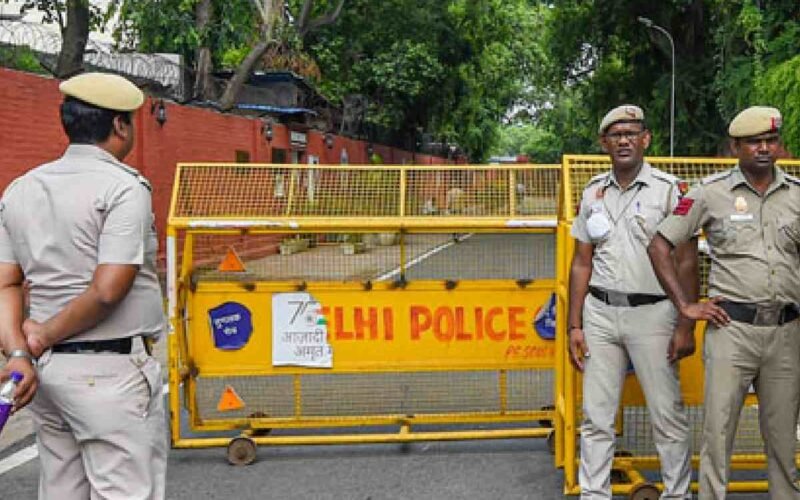
New Delhi (Gurpreet Singh) — Three women journalists have formally lodged complaints accusing Delhi Police personnel of manhandling and sexual harassment during their detention amid demonstrations against the Election Commission’s Special Intensive Revision (SIR) of electoral rolls, police confirmed on Sunday. Following the formal complaint, authorities registered the case, conducted required medical examinations, and transferred the investigation to the Crime Branch.
Deputy Commissioner of Police Neha Yadav stated that the complainants approached police around 6:00 PM on Sunday detailing misconduct by on-duty officers and staff during the detention drive on October 3. Yadav appealed to members of the public and eyewitnesses who may possess video recordings of the incident to submit their footage directly to the Crime Branch to assist in the inquiry.
Explaining the law-and-order response, police noted that prohibitory orders under Section 163 of the Bharatiya Nagarik Suraksha Sanhita (BNSS) had been enforced across the designated zone. Demonstrators linked to the All India Students’ Association (AISA) and civil society groups had gathered near Jantar Mantar to protest against Chief Election Commissioner Gyanesh Kumar. According to the police, participants were repeatedly directed to disperse under BNSS orders and were detained only after refusing compliance and attempting to breach security barricades alongside figures such as AISA president Neha Bora and senior advocates Prashant Bhushan and Kapil Sibal.
The latest complaints come amid widening legal actions, with Delhi Police registering at least three FIRs at the Parliament Street and Connaught Place police stations regarding the October 2 assemblies. Public demonstrations have intensified in the national capital following media reports indicating internal disagreements within the Election Commission over electoral roll management and technological platforms, allegations that the Commission has refuted by clarifying that internal inputs and procedural queries reflect routine administrative deliberations rather than institutional dissent.
