

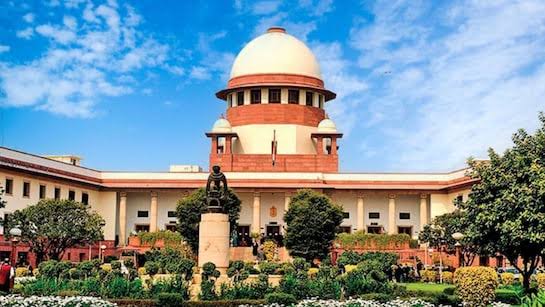
New Delhi, December 27, 2025— The Supreme Court has quashed the conviction of a man from Madhya Pradesh who was sentenced to 10 years of rigorous imprisonment for rape, after noting that the complainant woman and the convict are now married and living together.
A Bench comprising Justice B.V. Nagarathna and Justice S.C. Sharma observed that the relationship between the two appeared to be consensual and had been given a criminal colour due to a misunderstanding. The court remarked that it had a “sixth sense” that the parties could be reunited and noted that they were married in July 2025 and have been residing together since then.
Invoking its powers under Article 142 of the Constitution to do complete justice, the apex court set aside the complaint as well as the conviction and sentence imposed on the man. It held that the case stemmed from a consensual relationship that was later perceived as one involving a false promise of marriage, whereas both parties had, in fact, intended to marry each other.
The Supreme Court also directed the Chief Medical Officer of Sagar district in Madhya Pradesh to revoke the man’s suspension from service and release the arrears of his salary.
The verdict came on an appeal filed by the man against an April 2024 order of the Madhya Pradesh High Court, which had refused to suspend his sentence. The trial court had earlier convicted him and awarded 10 years’ rigorous imprisonment along with a fine of ₹55,000.
During the proceedings, the Supreme Court interacted with both the complainant and the convict in the presence of their parents. After learning that the two were willing to marry, the court had granted interim bail to the man to enable the marriage, which was solemnised in July this year.
According to the judgment, the man and the woman first connected on a social media platform in 2015 and developed a relationship that later became physical. The woman had alleged that the relationship was based on a false promise of marriage. The court noted that the appellant’s request to postpone the marriage may have caused insecurity, prompting the woman to file a criminal complaint in November 2021.
Following his conviction by the trial court, the man approached the high court, and after his plea was rejected, he moved the Supreme Court, which ultimately granted him relief by quashing the conviction.
