

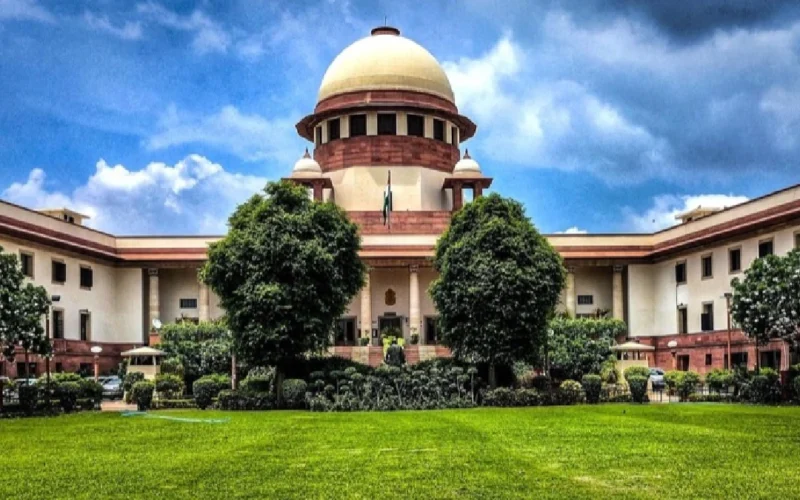
New Delhi (Gurpreet Singh): The Supreme Court of India has expressed “serious concern” over the widespread illegal encroachments along the banks of the River Ganga and has directed the National Mission for Clean Ganga Authority (NMCGA) to submit a comprehensive report on the current status. The Bench, comprising Justice JB Pardiwala and Justice KV Viswanathan, issued this directive on March 12, 2026, after reviewing an older affidavit that highlighted massive, unauthorized structures across the river’s plains and periphery.
The scope of this investigation is vast, as the Ganga basin extends across several states and Union Territories. The court has specifically issued notices to:
- Direct Flow States: Uttarakhand, Uttar Pradesh, Bihar, Jharkhand, and West Bengal.
- Basin States/UTs: Delhi, Haryana, Rajasthan, Himachal Pradesh, Madhya Pradesh, and Chhattisgarh.
Concerns Over Biodiversity and 2016 Guidelines
Advocate Akash Vashishtha, representing the appellant, argued that these encroachments are not just a legal or administrative issue but an ecological one. He pointed out that several segments of the riverbanks are critical habitats for freshwater dolphins, which are increasingly threatened by human activity and unauthorized construction. The court noted that the previous data provided by the NMCGA was two years old and demanded an updated account of what has changed on the ground.
A major focus of the upcoming report will be the implementation of the October 7, 2016, notification. This federal guideline, issued under the Environment (Protection) Act, was intended to safeguard the river, yet the court observed that many of its clauses remain unexecuted. The Bench has asked the NMCGA to identify specific “impediments or hurdles” that are preventing them from clearing the river plains and ensuring a free flow of the water.
Legal Hurdles and State-Level Progress
The challenges facing this mission were exemplified by the situation in Bihar. The state’s counsel informed the court that while they have identified 213 encroachments, they have only been able to demolish 58. The remaining 145 structures are currently protected by various interim orders passed by the Patna High Court and several district courts, creating a judicial bottleneck that hinders the cleanup mission.
To address these types of issues nationwide, the Supreme Court has asked Additional Solicitor General Aishwarya Bhati to seek instructions on what specific directions the Authority needs from the top court to override these hurdles. The final report must also include a detailed status update on flood plain demarcation in every involved state to prevent future unauthorized settlements.
The matter has been posted for a follow-up hearing on April 23, 2026.
