

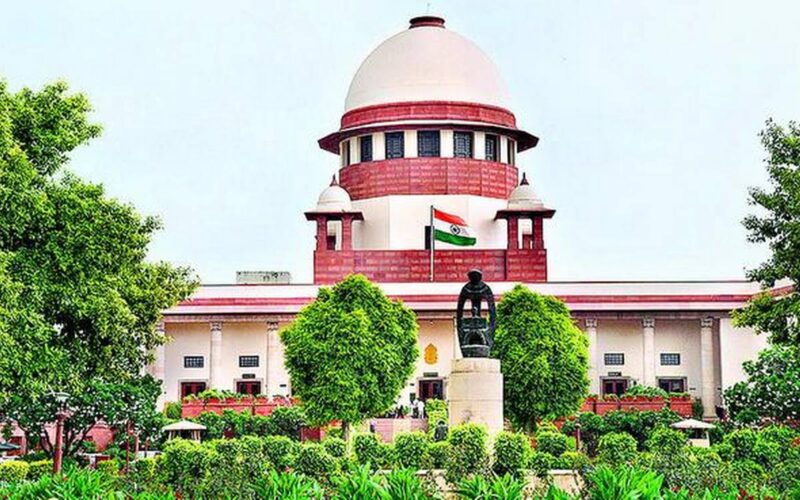
NEW DELHI: The Supreme Court on Wednesday struck down certain provisions of the Tribunals Reforms Act, 2021, declaring them unconstitutional for undermining judicial independence and flouting its prior rulings. The court observed that the legislation attempted to legislatively overrule binding judgments without correcting any defects.
A Bench headed by Chief Justice BR Gavai and Justice K Vinod Chandran held that provisions regarding the appointment and tenure of tribunal members violated the separation of powers and could not be upheld. “The Act amounts to a legislative overwrite of binding judgments without curing any defects,” the court said.
The verdict directs the Central government to form a National Tribunals Commission within three months to ensure the proper functioning and autonomy of tribunals. The Bench criticized the government for ignoring Supreme Court directives and making only superficial changes to re-enact provisions previously found problematic.
According to the judgment, members of tribunals, including the Income Tax Appellate Tribunal (ITAT) and the Customs, Excise and Service Tax Appellate Tribunal, shall continue to serve until 62 years of age, while Chairpersons and Presidents will serve till 65 years. Appointments made before the 2021 Act will follow prior Supreme Court guidelines rather than the truncated tenure introduced by the Act.
The Tribunals Reforms Act, 2021, which replaced the 2021 Ordinance, had altered rules on member appointments and tenure and abolished certain appellate tribunals, such as the Film Certification Appellate Tribunal. Petitioners, including the Madras Bar Association, had challenged the Act for violating the court’s earlier rulings that tribunal members must have a minimum five-year tenure and lawyers with at least ten years of practice at the Bar should be eligible for appointment.
The Bench stressed that addressing the backlog of tribunal cases is not solely the judiciary’s responsibility, and the executive must actively participate in reducing pendency. The court also noted earlier frustrations with the Centre, pointing out that repeated adjournments and failure to follow judicial directions were “very unfair to the court.”
By striking down the provisions, the Supreme Court reaffirmed the principle that legislative action cannot override judicial rulings without fulfilling the requirements set out in prior judgments, upholding the autonomy and integrity of tribunals across the country.
