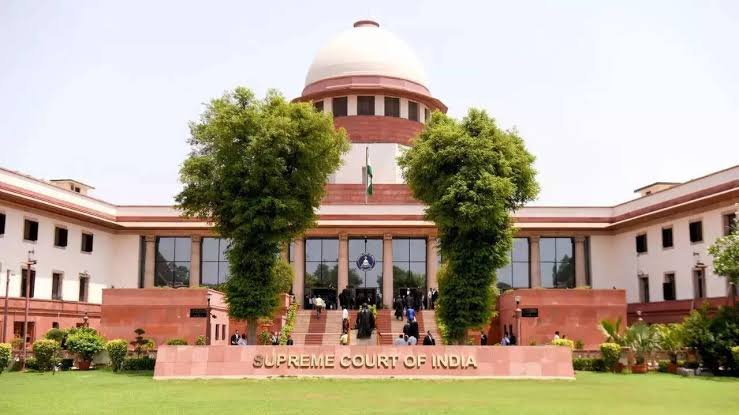
New Delhi (Gurpreet Singh): The Supreme Court of India on Wednesday asserted its jurisdiction to examine whether certain religious practices could be deemed superstitious, even as the Centre argued that such determinations fall outside the scope of a secular court.
The observations came during the second day of hearings on petitions seeking a review of the court’s 2018 verdict on the Sabarimala Temple, which had lifted the ban on entry of women aged between 10 and 50 years into the shrine dedicated to Lord Ayyappa.
Appearing for the Centre, Solicitor General Tushar Mehta questioned the court’s use of “constitutional morality” as a basis for judicial review in matters of religion. He argued that even if a practice is considered superstitious, it is for the legislature—not the judiciary—to intervene under constitutional provisions and enact reform laws.
Mehta also raised concerns over earlier landmark rulings on issues such as adultery and same-sex relationships, stating that they were based on a subjective interpretation of constitutional morality.
However, members of the Bench pushed back against this argument. Justice Ahsanuddin Amanullah remarked that the court has the authority to examine such issues, calling the Centre’s position “too simplistic.” He said that while the legislature may ultimately act, the judiciary cannot be excluded from assessing constitutional questions.
Justice Joymalya Bagchi further questioned whether courts should remain passive in cases where harmful practices such as witchcraft are challenged under Article 32, especially in the absence of legislative action.
Justice BV Nagarathna noted that determining essential religious practices must consider the philosophy of the religion concerned, while remaining subject to public order, morality, and health as outlined in the Constitution.
The Bench also deliberated on the issue of locus standi, with the Centre arguing that the petitioners were not devotees of Lord Ayyappa. Chief Justice Sanjiv Khanna observed that if locus was a concern, the petition should have been dismissed at the outset when it was filed.
The hearing reflects an ongoing constitutional debate over the balance between religious freedom and judicial intervention, particularly in a diverse society. The matter is set to continue on Thursday.
Supreme Court Asserts Authority to Examine Religious Practices Amid Sabarimala Review Hearing
 0 Comments