

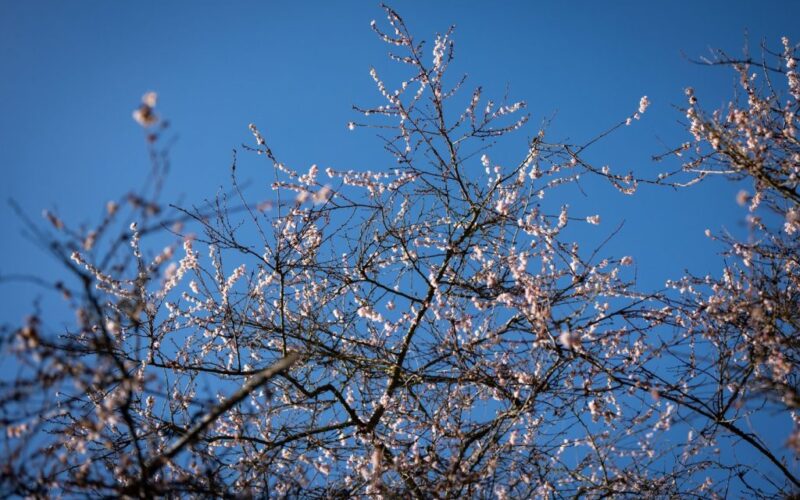
Vancouver (Rajeev Sharma): While parts of Canada remain locked in deep winter, Vancouver is already showing signs of spring, underscoring the dramatic contrasts of the country’s climate this season. An unusually mild winter on the West Coast has left the city green and blooming, even as eastern Canada continues to dig out from heavy snow and extreme cold.
Vancouver is on track to experience its first snow-free winter in more than four decades. January temperatures were among the warmest on record, allowing cherry blossoms, daffodils and other flowers to bloom weeks ahead of schedule. Even bees were spotted out foraging this week, an uncommon sight for mid-winter.

Meteorologists say persistent warm air, steady rainfall and intermittent sunshine have fueled early plant growth, with overnight temperatures rarely dropping low enough to cause frost damage. Several coastal B.C. communities, including Sandspit and Bella Bella, also surpassed previous daily temperature records.
Environment Canada meteorologist Bobby Sekhon said repeated high-pressure systems have settled over the province, creating stable and mild conditions. As a result, winter weather in many parts of British Columbia has only appeared briefly this season.
“This winter has been highly unusual overall,” Sekhon said.
The warmth, however, has not been universally welcomed. Ice rinks have melted, ski hills have shut down temporarily, and experts warn that a sudden cold snap could damage early-blooming plants. The abnormal conditions have also renewed concerns about the long-term effects of climate change.
A very different reality is unfolding roughly 3,400 kilometres to the east.
Toronto endured a barrage of snowstorms throughout January, culminating in a record-breaking snowfall. On Jan. 25 alone, Toronto Pearson International Airport measured 46 centimetres of snow — the highest single-day total ever recorded. By the end of the month, snowfall reached 88.2 centimetres, making it the snowiest January since record-keeping began in 1937.
Environment Canada meteorologist Trudy Kidd attributed the prolonged cold to the polar vortex, a mass of frigid Arctic air that can dip southward when weakened. Late January temperatures plunged well below seasonal norms, accompanied by biting wind chills.
Nearby communities also saw historic snow totals. Waterloo set a new record for winter snowfall by the end of January, while Hamilton remained under cold weather alerts, with wind chills making it feel closer to –22 C.
Toronto’s winter woes are not over yet. Forecasts continue to call for strong winds and temperatures dropping to around –18 C, prolonging the city’s icy grip.
Despite the extremes in Vancouver and Toronto, even harsher conditions have been recorded elsewhere in the country. In December, Braeburn, Yukon, registered a temperature of –55.7 C — the coldest recorded in Canada in half a century.
From blooming cherry trees to frozen lakes, this winter has showcased Canada’s vast climatic contrasts in striking fashion.
