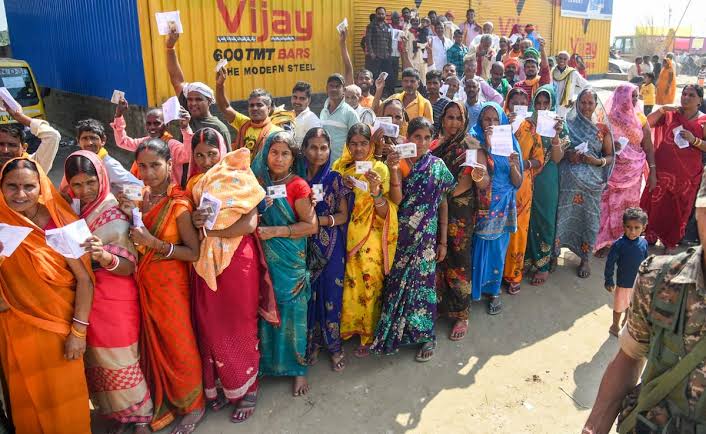
Patna, November 6, 2025 — Bihar witnessed its highest-ever voter turnout on Thursday as nearly 65 percent of the 3.75 crore electorate cast their votes across 121 constituencies in the first phase of the assembly elections. The Election Commission described the polling as “peaceful and festive,” noting that the 64.66 percent turnout was the highest in the state’s electoral history.
The first phase marks the beginning of a high-stakes contest seen as a referendum on the ruling NDA’s two-decade-long governance, pitting Chief Minister Nitish Kumar’s “sushasan” model against the opposition INDIA bloc’s campaign centered on job creation and anti-incumbency. RJD leader Tejashwi Yadav has promised “one job per family,” a move that has energized young voters.
The elections for Bihar’s 243-member assembly carry national significance, with political observers viewing them as an early indicator of voter sentiment ahead of the 2029 general elections. The polls also follow a controversial revision of the electoral rolls by the Election Commission, which the opposition alleged was manipulated in favor of the ruling alliance.
Minor incidents of violence were reported, including an attack on Deputy Chief Minister Vijay Sinha’s convoy in Lakhisarai. However, polling largely remained peaceful. A total of 1,314 candidates, including RJD’s Yadav, Deputy CMs Samrat Choudhary and Vijay Sinha, and several cabinet ministers, contested in this round.
Prime Minister Narendra Modi lauded the strong turnout of women voters, describing it as a “positive sign” for the NDA. “Mothers, daughters, and sisters have suffered the most under ‘jungle raj.’ Today, they have formed a fortress around polling booths to prevent its return,” he said.
The NDA is counting on Nitish Kumar’s governance record and recent welfare initiatives — including 125 units of free electricity, ₹10,000 cash transfers to over one crore women, and enhanced social pensions — to offset anti-incumbency.
Opposition leaders, however, expressed confidence that the electorate would vote for change. RJD chief Lalu Prasad invoked a local metaphor, writing on X, “If a roti is not flipped on the tawa, it gets burnt. Twenty years is long enough — a Tejashwi government is needed to build a new Bihar.”
The RJD accused election officials of deliberately slowing down voting in strong opposition areas, a charge denied by the Election Commission. Meanwhile, Deputy CM Sinha alleged that RJD workers attacked his convoy to intimidate voters from extremely backward classes.
A surprising factor in this election is the emergence of Prashant Kishor’s Jan Suraaj Party. The former political strategist, known for his grassroots campaigns, has positioned himself as an alternative to both major alliances. Kishor’s promises of good governance and his proposal to scrap Bihar’s prohibition law have stirred debate, especially among younger and urban voters.
Caste equations continue to play a decisive role, with Yadavs, Kushwahas, Kurmis, Brahmins, and Dalits shaping electoral outcomes in key constituencies. The second and final phase of polling will take place on November 11, and counting is scheduled for November 14.