

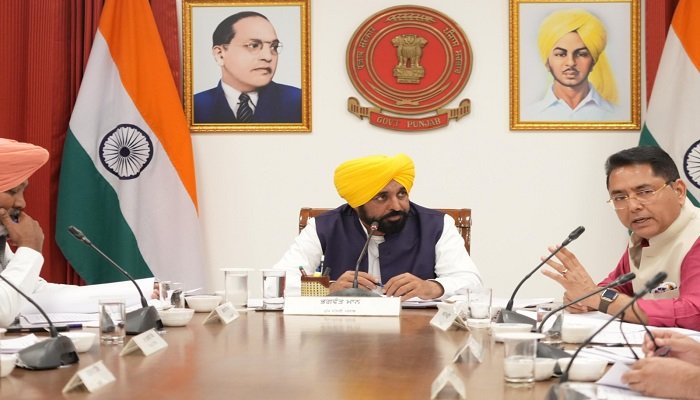
Gurpreet Singh :- In a significant decision aimed at supporting farmers and strengthening flood preparedness, the Punjab Cabinet, led by Chief Minister Bhagwant Mann, has granted permission to farmers to carry out desilting activities on their land along the Sutlej and Ghaggar river belts.
The move comes in response to the extensive damage caused by last year’s floods, which left large tracts of agricultural land covered with sand and silt, severely affecting productivity. Under the new decision, landowners will be allowed to remove silt from identified areas at their own expense, enabling them to restore soil quality and improve cultivation prospects.
The government has identified nine sensitive locations where desilting will be permitted. These include regions such as Harsha Bela, Mandala Tajowal, Ruknewala, Khaira Bet, Burj Chehlan, and Karali, among others. Officials stated that the initiative is part of a broader strategy to mitigate flood risks and ensure better management of riverine zones.
Farmers will also be allowed to use the extracted sand and soil for their own purposes without any charges. However, the permission is time-bound and will remain valid until June 30, 2026.
Finance Minister Harpal Singh Cheema, while addressing the media after the cabinet meeting, said the decision builds on earlier measures taken during the flood crisis, including policies that empowered farmers to manage sand deposits on their land.
In addition to the desilting approval, the Cabinet also cleared amendments to the Punjab Panchayati Raj Rules, 1994. The changes will impact the reservation roster for the posts of Chairpersons and Vice-Chairpersons in Zila Parishads.
The revision has been necessitated due to administrative boundary changes in six districts — Mohali, Patiala, Malerkotla, Sangrur, Ferozepur, and Fazilka — where villages have been reassigned, altering jurisdictional limits. As a result, the reservation rotation system in these districts will now be restructured to reflect the new boundaries.
The decisions are seen as a dual effort by the state government to address both agrarian concerns and administrative restructuring, with a focus on long-term governance and rural development.
