

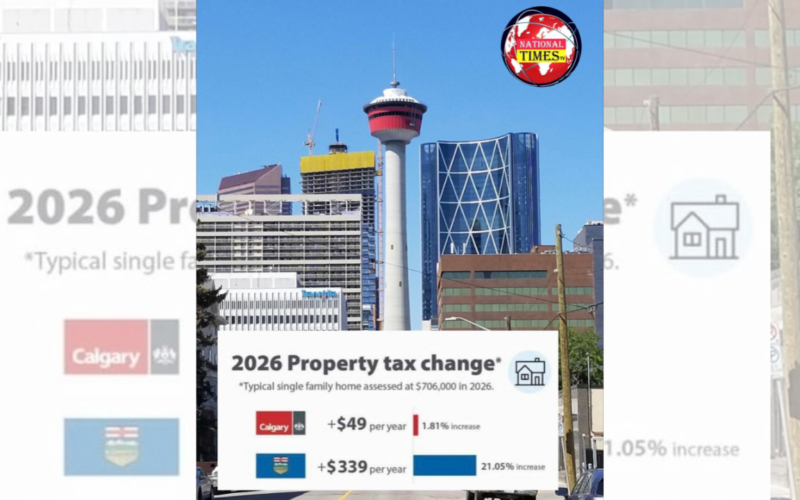
Calgary (Rajeev Sharma): Residents of Calgary are facing growing financial anxiety after the Alberta government announced a significant increase in the provincial education portion of property taxes. The move by the governing United Conservative Party under Premier Danielle Smith could push the provincial share of property taxes collected in Calgary up by around 21%, creating what many city officials are calling one of the most serious tax pressures on homeowners in recent years.
Calgary Mayor Jeromy Farkas has strongly criticized the decision, warning that the increase could translate into hundreds of dollars more per year for the average homeowner. Although property taxes are collected by the city, a large portion is transferred directly to the provincial government to fund education. City officials say the growing provincial share means that a significant amount of the taxes collected from Calgarians is no longer controlled at the municipal level.
The mayor described the hike as deeply concerning at a time when many families are already struggling with rising housing costs, inflation, and higher utility bills. According to city leaders, nearly half of every property tax dollar collected in Calgary is now expected to go toward the provincial education levy, intensifying concerns about affordability and financial strain on households.
The announcement has triggered strong reactions from residents across Calgary. Many homeowners say they are already facing mounting financial pressures due to rising mortgage rates, groceries, insurance, and energy costs. Some residents have questioned why another major tax increase is being introduced when the cost of living continues to climb. In community forums and public discussions, several Calgarians have expressed frustration that governments appear disconnected from the economic realities faced by ordinary families.
Political criticism has also intensified. The opposition Alberta New Democratic Party has condemned the move, arguing that the provincial budget is placing additional burdens on municipalities and taxpayers instead of addressing the province’s affordability crisis. NDP representatives say the government should be focusing on reducing financial pressure on families rather than increasing property taxes through the education levy.
The growing backlash has fueled a wider political debate across Alberta about taxation, transparency, and the relationship between the provincial and municipal governments. Calgary city council is now exploring options to clearly separate the municipal and provincial portions of property tax bills, allowing residents to see exactly how much of their payment goes to the provincial government.
As the controversy grows, the issue is quickly becoming one of the most significant financial and political challenges facing residents of Calgary this year, raising broader questions about affordability, government accountability, and the future of taxation in Alberta
