

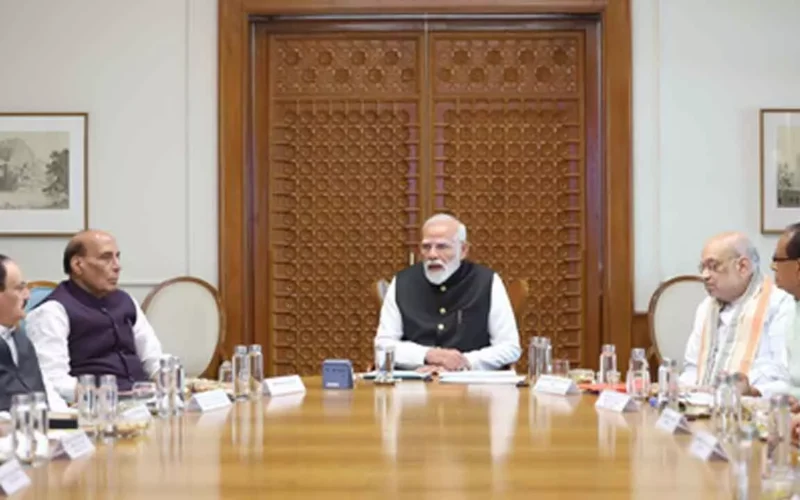
New Delhi (Gurpreet Singh): Prime Minister Narendra Modi chaired a high-level meeting on Sunday, March 22, 2026, to assess India’s energy preparedness as the conflict in West Asia enters a critical fourth week. The session was attended by top Cabinet officials, including Defence Minister Rajnath Singh, Finance Minister Nirmala Sitharaman, External Affairs Minister S. Jaishankar, and Commerce Minister Piyush Goyal. The primary objective of the review was to ensure an uninterrupted supply of crude oil and natural gas while maintaining stable logistics and efficient distribution across the country amidst growing regional instability.
The meeting comes in the wake of a significant Iranian missile strike on a major Qatari refinery on Saturday, which has severely impacted Liquefied Petroleum Gas (LPG) supply chains. India currently relies on imports for 65% of its LPG requirements, with nearly 47% sourced from Qatar alone. While the government noted that crude oil stocks remain stable with no reported shortages at retail outlets, the situation regarding LPG has been officially described as “worrisome” due to the disruption of these vital Gulf-based production hubs.
In a proactive response, the Union Government has invoked the Essential Commodities Act, 1955, to regulate the production and distribution of natural gas. To protect household consumers, the government has prioritised domestic LPG users while restricting commercial allocations. States have been directed to manage with 50% of their six-month average consumption for commercial LPG. Additionally, a new incentive structure has been introduced where an additional 10% allocation will be granted to states that successfully facilitate a transition of commercial users from LPG to Piped Natural Gas (PNG).
The high-level review also touched upon the broader implications for the power and fertiliser sectors, which are heavily dependent on gas imports. Prime Minister Modi has directed officials to monitor the situation on a real-time basis and to ensure that the “national character” is maintained during this period of global energy turmoil. The Ministry of External Affairs remains in constant dialogue with Gulf partners to secure alternative shipping routes and safeguard maritime transits for India’s energy needs.
