

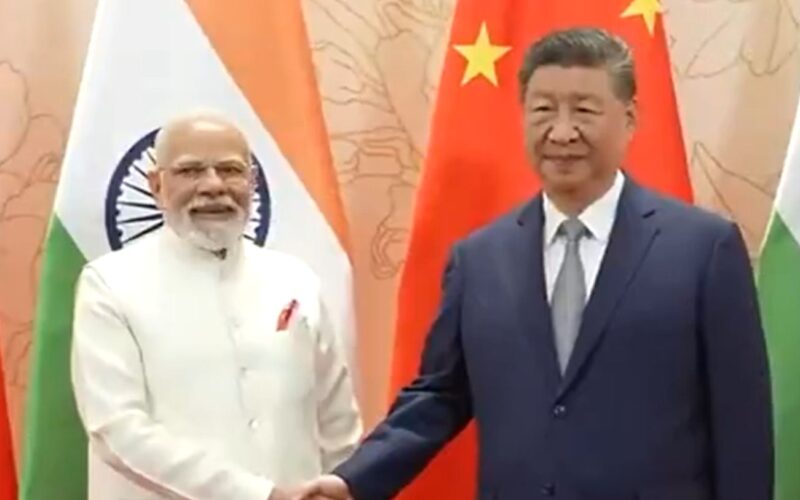
TIANJIN, CHINA(Rajeev Sharma): In a significant diplomatic engagement, Indian Prime Minister Narendra Modi met with Chinese President Xi Jinping on the sidelines of the Shanghai Cooperation Organisation (SCO) summit in Tianjin on Sunday. The meeting takes place at a time of evolving global alignments, particularly as India’s relationship with the United States experiences turbulence over recent trade and tariff disputes.
The interaction between Modi and Xi is being closely watched by regional observers, given the broader geopolitical context. According to diplomatic sources, the leaders touched upon a range of strategic concerns, including regional stability, trade cooperation, and multilateral engagement within the SCO framework. With both sides showing openness to continued dialogue, a second round of discussions could take place later in the day, sources suggested.
This meeting marks the first high-level dialogue between the two leaders since their last encounter at the BRICS summit in Kazan, Russia, in October 2024. Their latest exchange reflects a pragmatic approach to managing complex bilateral ties, especially amid a rapidly changing international order.
China, holding the rotating presidency of the SCO this year, is hosting the two-day summit with expanded participation under the “SCO Plus” format. The summit has brought together heads of state and government from 20 nations, underscoring its growing strategic relevance.
Among those in attendance are Russian President Vladimir Putin, Pakistani Prime Minister Shehbaz Sharif, Nepalese Prime Minister KP Sharma Oli, and Maldivian President Mohamed Muizzu. The leaders’ summit is scheduled to formally convene on Monday.
Prime Minister Modi is also expected to hold a bilateral meeting with President Putin before concluding his visit. The back-to-back meetings come as India navigates an increasingly complex diplomatic environment, balancing its relations with key global powers while reinforcing its regional presence.
As the SCO summit unfolds, the Modi-Xi meeting signals an intent to manage differences through dialogue, even as both nations pursue their broader strategic goals.
