

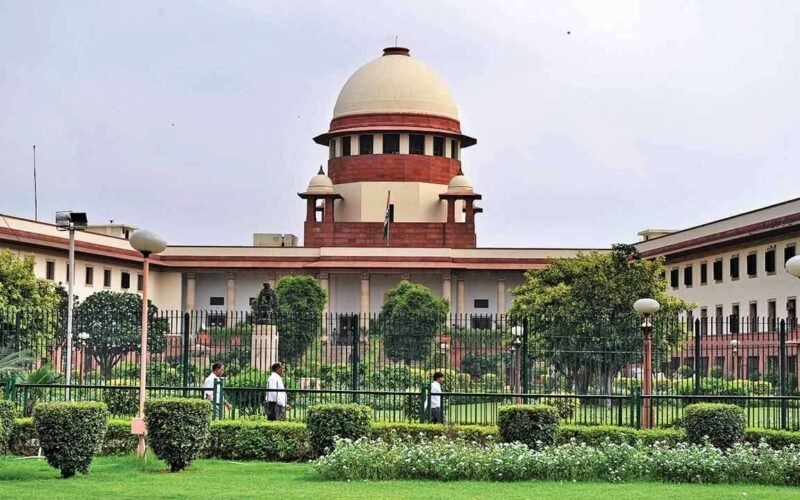
New Delhi (Gurpreet Singh): The Supreme Court on Wednesday made its interim protection against coercive action absolute for journalist Abhishek Upadhyay in a road-rage case registered by the Ghaziabad Police. The court also quashed a notice issued to social media platform X seeking his personal and digital information, questioning the breadth of the data request in relation to the alleged incident.
A Bench comprising Chief Justice of India Surya Kant and Justice Joymalya Bagchi passed the order on October 14. It also allowed Upadhyay to challenge the FIR before the Allahabad High Court and seek guidelines governing police collection of personal data during investigations.
The case relates to an alleged road-rage incident in Ghaziabad. Upadhyay, who has reported on alleged irregularities involving donations to the Ayodhya Ram Temple, has claimed that the FIR against him was intended to harass him over his journalistic work. That allegation has not been established as a finding by the court.
Why Did The Supreme Court Quash The Police Notice To X?
The Ghaziabad Police issued a notice to X on August 22 seeking information and digital details relating to Upadhyay. During the hearing, his counsel, senior advocate Pradeep Rai, pointed out that the FIR had been registered in August, while the police had sought information dating back to June 1.
The Bench questioned the need for such an extensive request in connection with an alleged road-rage incident. It observed that seeking information covering a period before the alleged offence appeared excessive.
The court quashed the notice and made it clear that personal or confidential information relating to the period before the alleged incident could not be obtained under that request. It also directed that any personal information obtained pursuant to the notice must not be used against Upadhyay.
What Is The Road-Rage Case Against Abhishek Upadhyay?
The FIR was registered at Indirapuram Police Station in Ghaziabad over an alleged road-rage incident said to have taken place on August 18 near Shipra Mall.
According to Upadhyay’s submissions, a motorcyclist allegedly touched his car and subsequently called the police emergency helpline. He said an FIR was registered later and alleged that the accusations against him were fabricated.
Upadhyay also claimed that a police team visited his residence late on August 20 and that he feared arrest. He sought the quashing of the FIR or, alternatively, the transfer of the investigation to an independent agency.
These are the journalist’s allegations and submissions. The Supreme Court’s latest order does not amount to a finding that the road-rage complaint was fabricated.
What Protection Has The Supreme Court Granted Him?
The Supreme Court had granted interim protection from coercive action on August 25. On Wednesday, it made that protection absolute, subject to his cooperation with the investigation.
The Bench also granted Upadhyay liberty to challenge the FIR before the jurisdictional High Court. Separately, it allowed him to approach the court seeking guidelines for the collection of personal data by police during investigations.
The court also directed the authorities to release his seized vehicle forthwith and no later than two days, according to reports on the order.
Why Is The Case Significant For Journalists’ Digital Privacy?
The proceedings raise questions about how extensively investigators can seek a journalist’s digital information when probing an alleged offence.
The Supreme Court questioned the request for data covering months before the alleged road-rage incident. Its order addresses the specific notice issued to X and the use of information obtained under it; it should not be read as a blanket prohibition on police collecting digital evidence in criminal investigations.
The underlying FIR remains a separate matter that Upadhyay has been permitted to challenge before the Allahabad High Court.
