

New Delhi (Gurpreet Singh): The Indian government has clarified its recent decision to join a significant United Nations statement condemning Israeli settlement activities in the West Bank, emphasizing that the move is a direct reflection of its long-standing foreign policy. This clarification follows a period of diplomatic observation where India initially opted out of a high-profile joint appearance by various nations in New York, only to formally associate itself with the collective statement later. According to the Ministry of External Affairs, this alignment underscores India’s persistent advocacy for a negotiated settlement that respects international law and established borders.
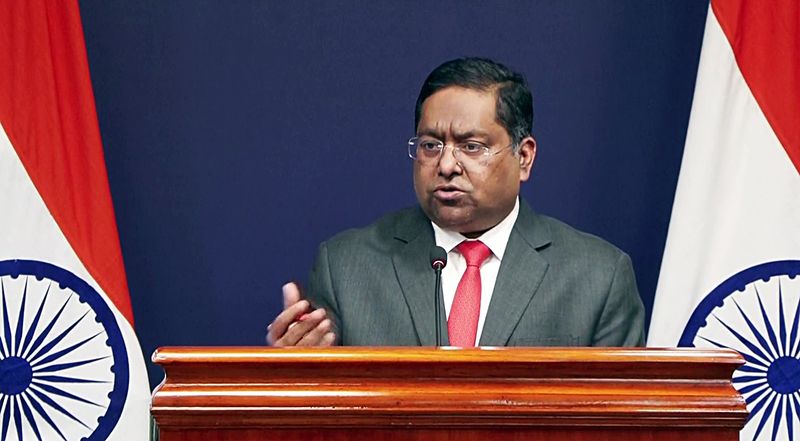
In a briefing regarding the decision, Ministry spokesperson Randhir Jaiswal explained that while the text was not a formally negotiated UN resolution, it represented a unified stance by a group of countries against unilateral measures. Jaiswal noted that India’s participation is entirely consistent with the principles articulated during the recent India-Arab League Ministerial meeting. In that forum, New Delhi reaffirmed its dedication to a comprehensive and enduring peace in the Middle East, grounded in the Arab Peace Initiative and relevant international mandates.
The official stance of the Indian government continues to support the creation of a sovereign, independent, and viable State of Palestine. This vision entails Palestine and Israel living side by side in peace, based on the borders established in 1967. By joining over 100 other states and international organizations in this latest declaration, India has signaled its rejection of any efforts to alter the demographic composition or legal character of territories occupied since 1967, including East Jerusalem. Such changes are viewed by the signatory nations as potential de facto annexation that could undermine the foundation of future peace talks.
Historically, India has managed a delicate diplomatic balance, maintaining a robust strategic partnership with Israel while simultaneously advocating for the inalienable rights of the Palestinian people. Officials indicated that this recent move should be seen as a sign of policy continuity rather than a sudden pivot. By lending its voice to the international consensus against unilateral territorial changes, India continues to position itself as a proponent of a stable, two-state outcome achieved through dialogue rather than territorial expansion.
