

New Delhi (Rajeev Sharma/Gurpreet Singh)— In a historic leap for global commerce, India and the European Union (EU) on Friday, February 27, 2026, released the final draft text of their long-awaited Free Trade Agreement (FTA). The proposed pact, hailed by trade experts as the “Mother of All Deals,” includes a landmark provision granting both parties “Most Favoured Nation” (MFN) status for a five-year period from the date the agreement officially comes into effect. This strategic alignment ensures that India and the 27-nation bloc will provide each other with the same preferential trade benefits—including reduced tariffs and advantageous regulatory treatment—that they offer to their most favoured global trading partners.
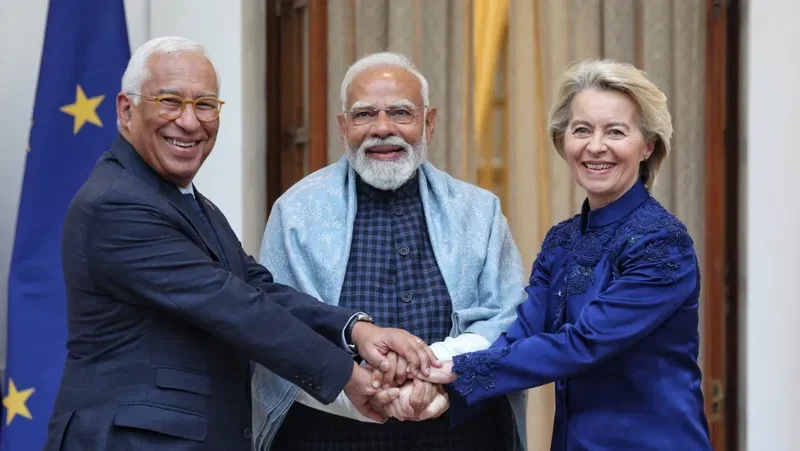
The release of the draft follows a series of high-level diplomatic engagements in New Delhi this past January, where Prime Minister Narendra Modi met with European Commission President Ursula von der Leyen and European Council President Antonio Costa to finalize the framework. Under the terms of the agreement, approximately 93 per cent of Indian exports will enter the European market duty-free. In exchange, India has agreed to lower import barriers for iconic European luxury goods, such as high-end automobiles and premium wines. Furthermore, tariffs on 96.6 per cent of the total value of EU goods exported to India will be either significantly reduced or entirely eliminated, marking a new era of market accessibility.
Despite the sweeping nature of the deal, both parties have maintained protections for their most vulnerable sectors. A select list of highly sensitive agricultural products, including soy, cattle, sugar, rice, and dairy, has been excluded from the current agreement to safeguard domestic farming communities. Beyond physical goods, the FTA places a heavy emphasis on modernizing trade infrastructure. Both India and the EU have committed to strengthening customs cooperation, streamlining product clearance, and establishing transparent procedures for international traders to reduce bureaucratic delays.
A significant portion of the draft is dedicated to the burgeoning digital economy. The pact aims to dismantle unwarranted barriers to digital trade while promoting a secure online environment. Key provisions include the formal recognition of electronic signatures and digital contracts, alongside a push for paperless trade. Importantly, the proposal balances digital liberalization with national sovereignty, allowing both parties to uphold domestic laws while fostering a more integrated digital marketplace. As the final approval process begins, the India-EU FTA stands as a cornerstone of the world’s most strategic economic partnerships, promising a more balanced and reliable trade structure for the next decade.
