

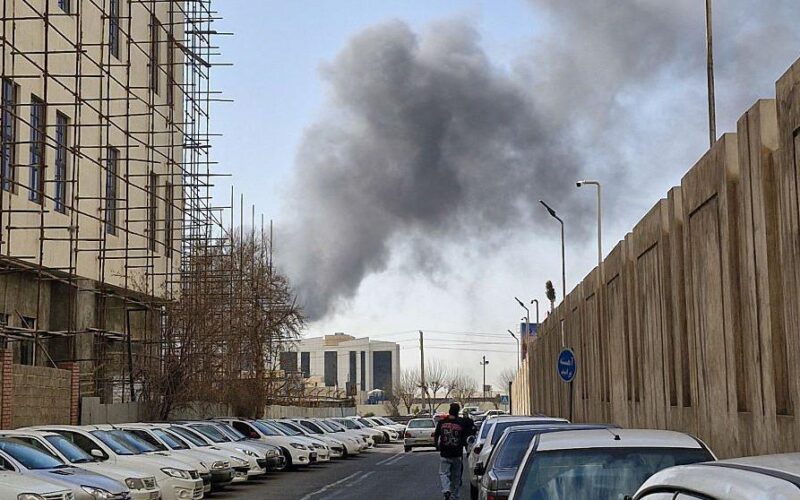
Tehran (Rajeev Sharma): Tensions in West Asia escalated sharply on Saturday as Iran launched a wave of missiles toward Israel following coordinated strikes by Israel and the United States on targets in Tehran, triggering fears of a wider regional conflict. Reports of explosions also emerged from parts of the United Arab Emirates, Qatar and Saudi Arabia, heightening anxiety across the Gulf.
The Israeli military said multiple projectiles were fired from Iranian territory in what it described as an “additional barrage.” According to officials, air defence systems were activated across several parts of the country as sirens sounded to warn residents. The Israeli Air Force said it was working to intercept incoming threats and conduct counter-strikes where necessary.
Earlier, Israel announced the launch of a joint military campaign with the United States, code-named “Operation Roaring Lion,” aimed at weakening what it called long-standing security threats posed by Tehran. In a statement, the Israel Defense Forces (IDF) said the operation was intended to significantly degrade Iran’s military capabilities and disrupt networks it alleges are backed by the Iranian government.
International media reports indicated that some of the strikes in Tehran occurred near offices linked to Iran’s Supreme Leader, Ayatollah Ali Khamenei. However, it was reported that the 86-year-old leader was not present in the capital at the time and had been moved to a secure location.
Iranian authorities have not released detailed information on casualties or damage from the Israeli-US action but vowed retaliation, calling the strikes a violation of sovereignty. Soon after, missiles were launched toward Israeli territory, marking one of the most direct confrontations between the two nations in recent times.
Unconfirmed reports of loud explosions in parts of the Gulf — including the UAE, Qatar and Saudi Arabia — have further fueled concerns that the conflict could spill beyond Israel and Iran. Regional governments have yet to issue comprehensive statements clarifying the nature of those incidents.
The renewed exchange of fire has dimmed prospects for diplomatic engagement, with analysts warning that continued escalation could destabilize an already volatile region. Global leaders are expected to call for restraint as the situation develops.
