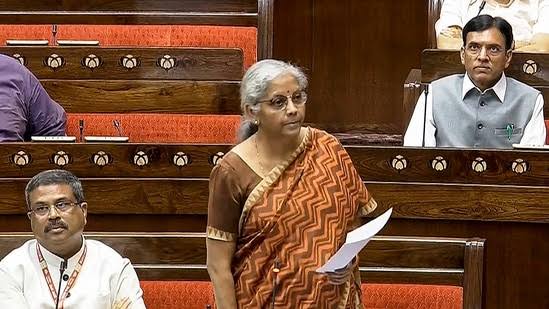
New Delhi, December 5, 2025: The Lok Sabha on Friday passed the Health Security se National Security Cess Bill, 2025, clearing the way for additional revenue from products such as pan masala to support India’s defence and public health requirements. Finance Minister Nirmala Sitharaman, while replying to the debate in the House, said the cess is essential for meeting modern defence needs and for strengthening state-level health systems.
She said that public health is a state responsibility while national defence is handled by the Centre, making it necessary to create dependable sources of funding. She emphasised that items categorised as demerit goods should not remain cheap, since low prices can increase consumption that harms public health. Responding to questions about why revenue from pan masala should go to the defence budget, she said raising taxes on harmful goods is justified, adding that no member would prefer reduced taxation on such products.
Sitharaman underlined that modern warfare relies on expensive technologies, including cyber capabilities, precision systems and space-based platforms. She reminded the House of earlier periods when the armed forces faced equipment shortages due to limited budgets, and noted that a former Defence Minister had publicly expressed an inability to purchase ammunition because of lack of funds. She said the government has worked over time to restore military preparedness and that India should never return to those gaps again. She also pointed out that the Centre had delivered substantial reductions in personal income tax within a year of taking office, highlighting its commitment to easing the tax burden on citizens.
She addressed concerns about how the new cess would be allocated by pointing to Section 7 of the Bill, which describes the framework for utilisation. She said the detailed distribution process will be defined in the rules, and stressed that cess collection falls completely under Parliament’s authority. The rate, she said, will be finalised after consultation with members. She clarified that Article 270 of the Constitution grants Parliament the power to impose a cess for a specific purpose.
To counter criticism that cesses reduce sources of revenue for states, Sitharaman presented data showing that multiple cesses existed long before 2014. She referred to the crude oil cess introduced in 1974, the National Calamity Contingent Duty created in 2001 and the Road and Infrastructure Cess imposed since 2000. She said that between 2014–15 and 2025–26, the Centre collected Rs 6,49,459 crore in Health and Education cess and distributed Rs 6,07,573 crore to states, indicating that the government has not withheld funds.
She also referred to another bill passed earlier in the session to increase excise duty on tobacco products. She clarified that this measure deals with excise duty and not cess, and assured the House that revenues from excise duty would enter the divisible pool and be shared with states at the standard 41 per cent rate. She said the government is returning to the excise duty structure that existed before the introduction of GST.
Both the Central Excise (Amendment) Bill, 2025, and the Health Security se National Security Cess Bill, 2025, were introduced on Monday, the opening day of the Winter Session. With the new legislation cleared, the government aims to reinforce military readiness and ensure stronger financial support for health initiatives across the country.