

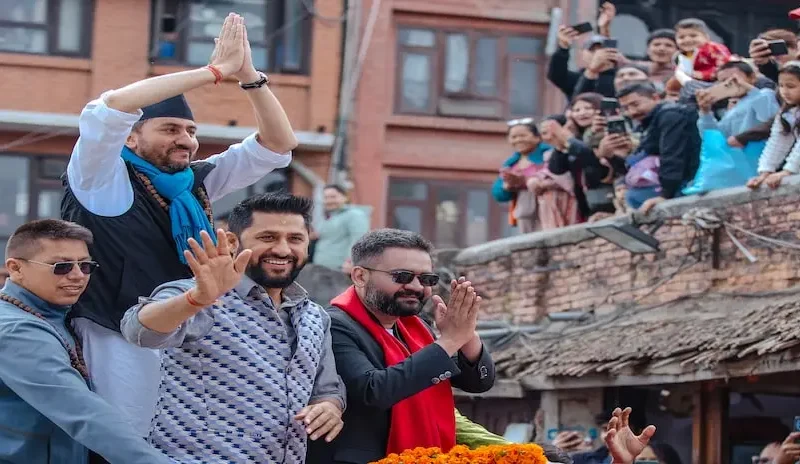
Kathmandu (Rajeev Sharma): In a political transformation described by locals as a “pairo” or landslide, the Rashtra Swatantra Party (RSP) has achieved an astounding supermajority in Nepal’s 275-member legislature. Making its electoral debut only in 2022 with a modest 21 seats, the RSP has defied all conventional projections to secure nearly 200 seats in the 2026 general elections. This massive mandate, crossing the two-thirds threshold, marks the first time since 2008 that a single political force has so thoroughly dominated the House, effectively ending the long-standing hegemony of the traditional “old guard” parties.
The catalyst for this seismic shift appears to be a profound electorate fatigue with systemic corruption and misgovernance. The RSP’s rise was significantly bolstered when Balen Shah, the charismatic rapper and former Mayor of Kathmandu, joined the party and eventually ascended to the role of Prime Minister. This political evolution was further accelerated by the 36-hour “GenZ protests” of 2025, which signaled a wholesale rejection of the established political order. Even high-profile veterans such as Nepali Congress’s Gagan Thapa and four-time Prime Minister KP Oli faced shocking defeats at the hands of first-time RSP candidates, illustrating a clear demand for youthful and energetic leadership.
The implications of this victory extend far beyond Nepal’s borders, catching major global powers—including India, China, and the United States—in a state of “shock and awe.” For the first time in nearly two decades, the profile of the legislature will no longer be dominated by a Communist majority. The combined strength of the Left parties has plummeted from 60 per cent to just 35 per cent, a development that is expected to complicate China’s strategic investments and its long-standing efforts to unify the various Marxist and Maoist factions under a single banner. Meanwhile, the United States continues to navigate a complex relationship with Kathmandu, with the USD 500-million MCC programme currently on pause and ongoing resistance from the Nepal Army regarding the State Partnership Programme (SPP).
Regionally, India remains Nepal’s most critical partner in political, military, and economic spheres. The decline of the Communist majority offers a potential opening for the new RSP government to resolve long-standing deadlocks, such as the suspended Agniveer recruitment scheme, which has prevented Nepal-domiciled Gorkhas from joining the Indian Army for five years. As Prime Minister Balen Shah prepares to lead a politically inexperienced but highly motivated cabinet, the focus now shifts to the implementation of the “ten-point agreement” and the reform agenda demanded by the youth. With a two-thirds majority, the RSP holds the constitutional power to reshape the “New Nepal” that voters have so decisively mandated.
