

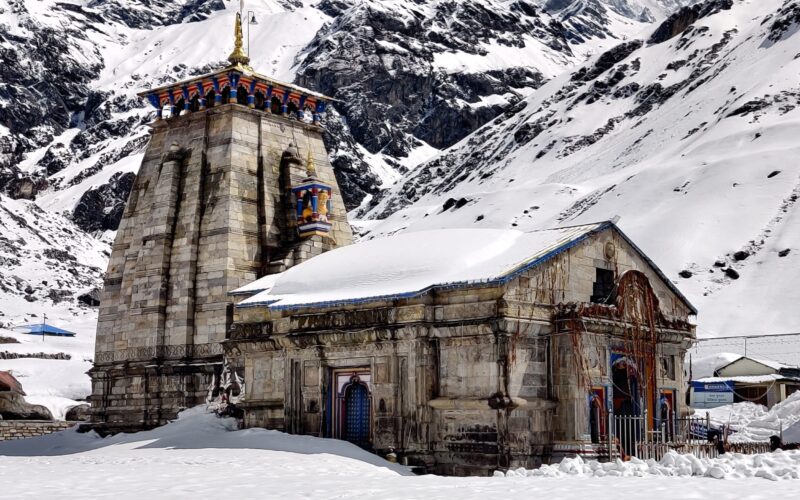
Rudraprayag (Rajeev Sharma): The portals of the Kedarnath shrine, nestled high in the Garhwal Himalayas, were ceremonially closed to devotees on Thursday morning, marking the end of the annual pilgrimage season. The sacred ritual took place amid Vedic chants and devotional music as the temperature in the region began to dip sharply.
According to officials of the Badrinath-Kedarnath Temple Committee (BKTC), the temple doors were shut at 8:30 a.m., following an elaborate worship ceremony performed by the temple priests. The event drew a gathering of pilgrims and seers, who braved the cold to witness the emotional moment when Lord Kedarnath’s idol was prepared for its winter journey to Ukhimath, the deity’s traditional winter abode.
For the next half-year, Lord Shiva will be venerated at the Omkareshwar Temple in Ukhimath, located about 19 kilometers from Guptkashi. Daily prayers and rituals will continue there until the reopening of Kedarnath next summer, typically around April or May, depending on the Hindu calendar.
The closing ceremony followed centuries-old customs, including offering special prayers, adorning the sanctum with flowers, and sealing the temple gates with sacred threads. Devotees present at the shrine shouted “Har Har Mahadev” as the main priest carried out the final rituals before the doors were closed.
Officials said that the 2025 Char Dham Yatra season recorded a surge in pilgrim numbers, boosted by improved infrastructure and favorable weather conditions during the initial months.
With Kedarnath now closed, preparations are underway to shut the other Char Dham temples — Badrinath, Yamunotri, and Gangotri — as the Himalayan region transitions into its harsh winter phase.
The closing of Kedarnath not only signifies the end of the pilgrimage season but also marks the beginning of a spiritual journey that continues through faith and devotion from afar, as devotees await the temple’s reopening next spring.
