

Dubai (Rajeev Sharma): The conflict spreading across West Asia intensified on Monday as Iran confirmed a new supreme leader and expanded military operations across several parts of the Middle East, raising fears of a broader regional crisis.
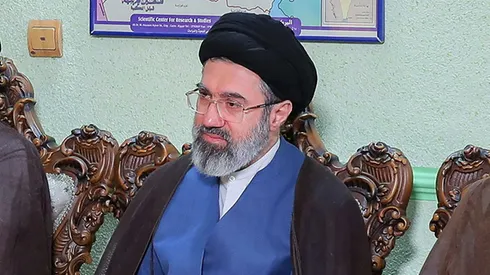
Authorities in Iran announced that cleric Mojtaba Khamenei has been chosen as the country’s next supreme leader following the death of his father, Ali Khamenei, during the opening phase of the ongoing war on February 28.
The appointment was confirmed by the powerful Assembly of Experts, which oversees the selection of Iran’s highest authority. Mojtaba Khamenei, who has largely remained out of the public spotlight in previous years, is known to have strong links with the Islamic Revolutionary Guard Corps, the unit leading many of the country’s current military operations.
Attacks expand across Gulf region
At the same time, Iran-linked forces continued launching missiles and drones across the region, targeting key infrastructure including oil facilities and water systems in Gulf countries.
In Saudi Arabia, a projectile reportedly struck a residential building in the city of Al Kharj. According to the Embassy of India in Saudi Arabia, no Indian citizens were killed in the incident. However, one Indian national sustained injuries and is currently receiving treatment at a local government hospital.
Aviation sector under pressure
The conflict is also creating ripple effects across global markets. Airline companies in Asia saw their share prices decline as rising fuel costs and restrictions on Middle Eastern airspace forced airlines to adjust flight routes and operations.
Industry analysts say the ongoing instability is increasing operational expenses for carriers already dealing with complex route changes to avoid conflict zones.
Energy markets react sharply
The crisis has also pushed global oil prices sharply higher. The price of Brent crude surged above $114 per barrel, the highest level recorded since 2022. Meanwhile, West Texas Intermediate crude also climbed to around the same level.
Experts attribute the sudden jump to fears that the ongoing conflict could disrupt energy production and shipping routes in the oil-rich Middle East.
With a new leader now in place in Tehran and military tensions continuing to spread, the situation across the region remains uncertain as governments and markets watch developments closely.
