

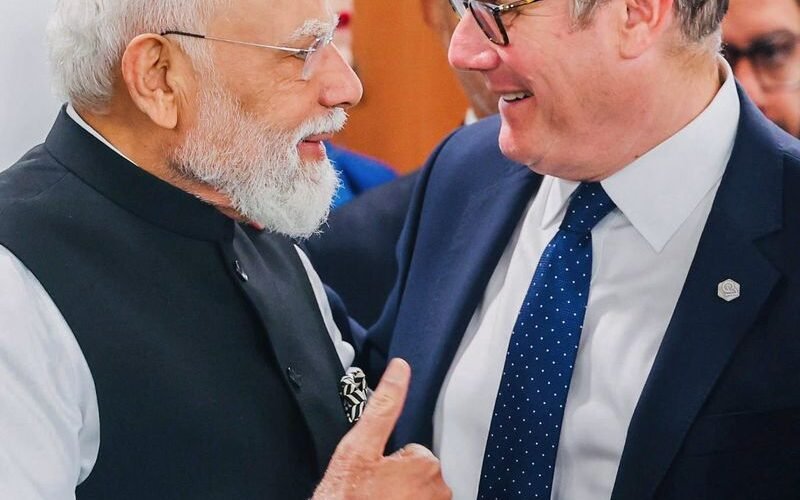
New Delhi (Gurpreet Singh): India and the United Kingdom have announced that the long-awaited Comprehensive Economic and Trade Agreement (CETA) will come into force on July 15, 2026, ushering in a new era of bilateral trade, investment and economic cooperation between the two countries.
Alongside the trade pact, the Social Security Agreement, also known as the Double Contribution Convention (DCC), will also take effect on the same date, offering significant benefits to Indian professionals and businesses operating in the UK.
One of the key gains secured by India under the social security arrangement is the extension of the exemption period from three years to five years, allowing Indian employees on temporary assignments in the UK to avoid dual social security contributions for a longer duration.
Prime Minister Narendra Modi welcomed the development, describing it as a historic milestone in India-UK relations. In a post on X, the Prime Minister said the agreement would significantly boost bilateral trade and investment while creating new opportunities for farmers, workers, MSMEs, startups and innovators.
The agreement is expected to deliver immediate benefits to Indian exporters through the elimination of tariffs across several major sectors. Under the pact, UK import duties on a wide range of Indian products will be reduced to zero, enhancing the competitiveness of Indian goods in one of the world’s largest consumer markets.
Export-oriented sectors expected to benefit include processed food products, marine products, engineering goods, auto components, leather and footwear, textiles and garments, chemicals and pharmaceutical products. The removal of tariffs is expected to lower costs for buyers, increase demand for Indian products and open fresh opportunities for manufacturers and exporters.
Industry experts believe the agreement could provide a major boost to India’s manufacturing sector by enabling businesses to compete more effectively in the UK market. The deal is also expected to strengthen India’s position in global supply chains by facilitating smoother access to international markets.
At the same time, India has safeguarded several sensitive agricultural sectors during negotiations. Products such as dairy items, cereals, millets, edible oils, oilseeds, apples and certain vegetable products remain protected under the agreement.
The services sector, a major strength of the Indian economy, is also set to gain substantially. The UK has offered one of its most comprehensive market access packages, covering all major service industries and 137 sub-sectors that are of significant export interest to India.
As a result, Indian companies and professionals engaged in information technology, financial services, healthcare, education, engineering, telecommunications, consultancy and other professional services are expected to benefit from improved market access and greater regulatory certainty.
The Social Security Agreement is another major highlight of the bilateral package. Under the arrangement, Indian employees temporarily posted to the UK and their employers will be exempt from making social security contributions in both countries simultaneously. This measure is expected to reduce employment costs and improve the competitiveness of Indian businesses operating overseas.
Government estimates suggest that more than 75,000 Indian professionals and over 900 companies are likely to benefit from the agreement. The move is expected to strengthen workforce mobility and deepen collaboration between Indian and British businesses, particularly in knowledge-based and high-skill sectors.
With the implementation date now confirmed, policymakers and industry leaders view the India-UK trade pact as one of the most significant economic agreements signed by India in recent years, with the potential to expand trade, attract investment and create new growth opportunities across multiple sectors.
