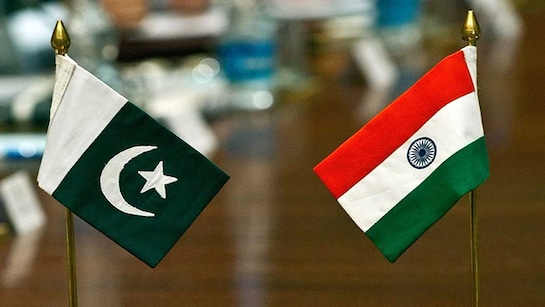
New Delhi, November 26 — India strongly rejected Pakistan’s criticism of the flag-hoisting ceremony at the Shri Ram Janmbhoomi Temple in Ayodhya, with the Ministry of External Affairs (MEA) stating that Islamabad’s comments deserved “contempt” and that Pakistan should instead focus on its own human rights failures.
MEA Spokesperson Randhir Jaiswal, responding to questions at the weekly media briefing, said Pakistan had “no moral standing to lecture others,” citing its long history of discrimination and mistreatment of minorities. “We have seen the reported remarks and reject them with the contempt they deserve,” Jaiswal said. “As a country with a deeply stained record of bigotry, repression, and systemic mistreatment of its minorities, Pakistan has no moral standing to lecture others. Rather than delivering hypocritical homilies, Pakistan would do better to turn its gaze inwards and focus on its own abysmal human rights records.”
The remarks came a day after Prime Minister Narendra Modi hoisted a saffron flag atop the “shikhar” of the sacred Shri Ram Janmbhoomi Temple during the Dhwajarohan Utsav, marking the formal completion of the temple’s construction. The ceremony coincided with the auspicious Panchami of the Shukla Paksha in Margashirsha and the martyrdom day of Guru Tegh Bahadur Ji, who meditated in Ayodhya for 48 hours in the 17th century.
The triangular saffron flag, ten feet high and twenty feet long, features a radiant Sun symbolizing Lord Ram’s brilliance and valour, along with an inscribed ‘Om’ and an image of the Kovidara tree. Officials described the flag as a symbol of dignity, unity, and cultural continuity, representing the ideals of Ram Rajya.
The flag was installed on a shikhar built in the traditional North Indian Nagara architectural style, while the surrounding 800-metre Parkota — a circumambulatory enclosure — reflects South Indian architectural traditions, highlighting the temple’s structural diversity.
The temple complex also includes 87 carved stone panels depicting episodes from Valmiki’s Ramayana on the outer walls and 79 bronze-cast cultural episodes placed along the Parkota, showcasing India’s artistic and spiritual heritage.
India Rebukes Pakistan for Remarks on Ayodhya Temple Flag-Hoisting, Calls Out Its Human Rights Record
 0 Comments