

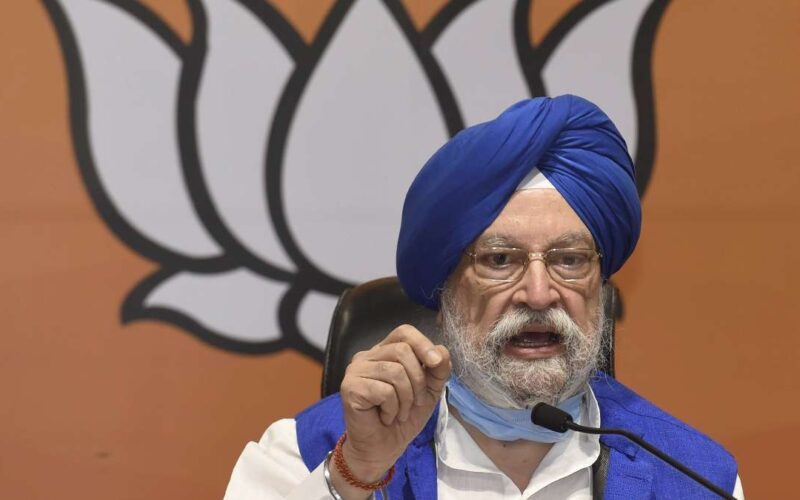
New Delhi (Rajeev Sharma): Union Minister for Petroleum and Natural Gas Hardeep Singh Puri has cautioned that India is not completely out of the woods as geopolitical tensions continue to affect global oil supplies and prices. Speaking about the evolving international situation, Puri said efforts to reopen the strategically important Strait of Hormuz involve multiple stakeholders, including the United States, Iran and Gulf countries, with discussions still underway.
The minister said there were reasons for cautious optimism, but the global energy situation remained uncertain. Referring to fluctuations in crude oil prices, he noted that rates had climbed from around $67-68 per barrel to nearly $120 before easing to approximately $92. He expressed hope that diplomatic developments would help bring prices down and remove obstacles to the uninterrupted movement of oil shipments.
Puri also pointed towards continuing tensions in the Red Sea, suggesting that challenges to maritime navigation were not limited to the Strait of Hormuz. He added that the ongoing Russia-Ukraine conflict was another factor keeping the international situation unsettled, and said the crisis could only be considered a matter of the past once meaningful progress was made on that front.
Highlighting India’s efforts to manage the impact of rising international oil prices, Puri said domestic fuel prices had declined over the preceding four years. He attributed this to excise duty reductions announced by Prime Minister Narendra Modi’s government on three occasions, including November 2021, May 2022 and March 10, 2026.
The minister also underlined the efforts made to maintain uninterrupted fuel availability across the country despite disruptions to international shipping routes. He said the priority was to ensure that household kitchens did not run out of essential supplies and that approximately 107,000 petrol pumps continued operating without running dry.
Puri’s remarks come amid continued uncertainty in global energy markets, with developments in West Asia, maritime security and the Russia-Ukraine conflict remaining important factors for oil prices and supply chains. He maintained that while India had taken steps to manage the situation, the wider international environment would play a significant role in determining how quickly conditions improve.
