

Goa (Rajeev Sharma): Known primarily for its beaches and tourism, Goa this week emerged as a key hub for global energy discussions as India Energy Week (IEW) 2026 began on Tuesday, underlining India’s push for sustainable and secure energy partnerships. The message from the inaugural session was clear: the global energy transition can succeed only with consistent investment, broader cooperation and a pragmatic approach that keeps energy affordable for fast-growing economies.
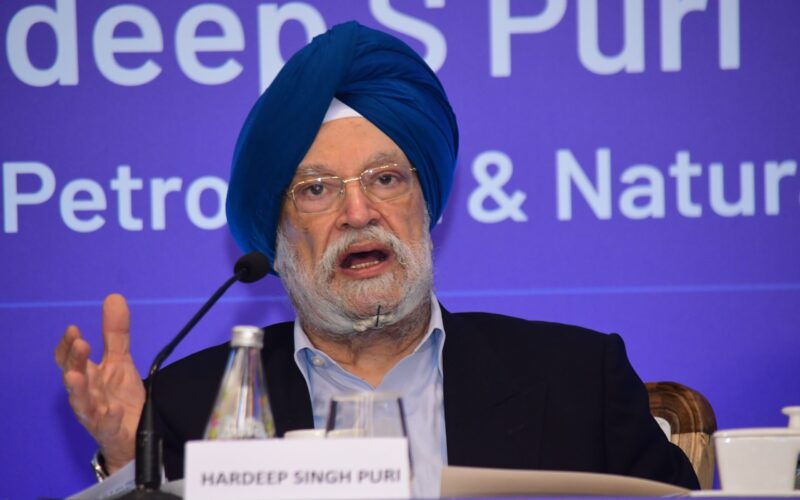
Union Petroleum and Natural Gas Minister Hardeep Singh Puri, UAE Minister and ADNOC CEO Sultan Ahmed Al Jaber, and Goa Chief Minister Pramod Sawant set the tone for the week-long event. Addressing the gathering, Puri said India has weathered recent global disruptions without fuel shortages by diversifying its supplier base and implementing structural reforms. He stressed that the energy transition should be viewed as “energy addition”, encompassing oil, gas, biofuels, green hydrogen, LNG and clean cooking fuels, rather than a sudden replacement of existing energy sources.
Highlighting policy reforms, Puri pointed to new exploration rounds, the opening of additional sedimentary basins and regulatory changes that together present an investment opportunity of nearly $500 billion across India’s energy value chain.
Chief Minister Pramod Sawant showcased Goa’s long-term vision of achieving 100 per cent renewable energy by 2050. He also spoke about the state’s effort to balance a green economy with a “blue economy”, ensuring responsible use of ocean resources alongside environmental protection.
Energy security amid global uncertainty
A high-level ministerial panel on the opening day brought together Puri, Canada’s Energy Minister Tim Hodgson and International Energy Forum Secretary General Jassim Al Shirawi to deliberate on energy security in an increasingly volatile global environment.
The panel emphasised that rising demand from emerging economies and ongoing geopolitical tensions have made secure, affordable and sustainable energy critical to economic resilience. Speakers agreed that there is no single energy transition model suitable for all countries.
Puri reiterated that India would continue to expand the share of natural gas in its energy mix, while urging producers and consumers to work together to ensure market stability. Hodgson underlined the need for trusted partnerships and diversified supply chains, while Al Shirawi cautioned that underinvestment, grid constraints and concentrated supply chains could undermine energy security even as renewable capacity grows.
Natural gas seen as key transition fuel
In a separate leadership session, industry leaders noted that natural gas and LNG would remain central to emission reduction efforts, with global gas demand projected to rise by 30 to 35 per cent by 2050. Executives from IndianOil, GAIL, ADNOC Gas and US-based Excelerate Energy said coal-to-gas switching offers the most practical near-term pathway to cut emissions while maintaining grid stability. However, they warned that affordability, infrastructure expansion and last-mile connectivity would be critical for gas to play this role effectively.
India–Canada energy engagement renewed
On the sidelines of the event, India and Canada relaunched their Ministerial Energy Dialogue and signed a joint statement aimed at deepening bilateral energy cooperation. The agreement focuses on expanding trade in LNG, LPG and crude oil from Canada to India, as well as refined petroleum products from India to Canada.
An official statement from India’s petroleum ministry highlighted Canada’s ambition to scale up energy exports and India’s position as the world’s third-largest oil consumer and a major driver of global energy demand. Both sides described the relationship as a “natural and symbiotic” energy partnership with long-term strategic potential.
