

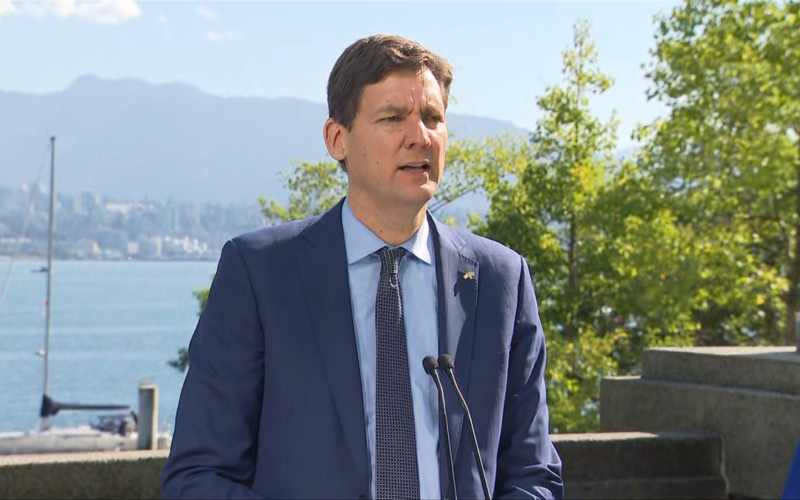
British Columbia (Rajeev Sharma): British Columbia Premier David Eby has said that major Indian corporations are showing strong interest in investing in Canada’s energy and mineral sectors, signaling a significant shift in bilateral economic engagement as relations between the two countries begin to stabilize.
Speaking after a trade mission to India, Eby said he held discussions with senior executives from companies including Tata Steel, Reliance Industries, Indian Oil Corporation and Hindustan Petroleum, focusing on opportunities in liquefied natural gas (LNG), clean energy and critical minerals. The delegation also met India’s energy minister and representatives from leading industrial groups such as JSW and Hindalco.
According to Eby, Indian firms are increasingly looking to secure long-term supplies of raw materials to support their rapid industrial expansion. “They are planning for sustained growth at rates of eight to ten per cent annually, which means they need reliable energy and mineral inputs,” he said. “British Columbia is well positioned to meet that demand.”
The discussions extended beyond supply agreements, with interest also expressed in direct investment and local processing facilities to reduce shipping costs. Eby said several companies were keen on minerals such as nickel, copper and rare earth elements, which are essential for manufacturing, renewable energy and advanced technologies.
The renewed engagement comes as Ottawa intensifies efforts to diversify Canada’s trade partnerships. Prime Minister Mark Carney has made reducing reliance on the U.S. market a strategic priority, especially as tariffs and trade threats from Washington continue to disrupt traditional commercial flows. India, now the world’s fastest-growing major economy, has emerged as a central pillar of that strategy.
B.C. Jobs and Economic Growth Minister Ravi Kahlon, who accompanied Eby on the trip, said Indian businesses have received clear policy guidance to expand their international trade relationships. “There is a strong push from leadership in India to broaden partnerships, and Canada fits well into that plan,” he said.
Improving ties represent a dramatic turnaround after diplomatic tensions flared under the previous Canadian government, following allegations of Indian involvement in intimidation campaigns and the 2023 killing of a Canadian citizen in British Columbia. While those accusations strained relations, both sides are now signaling readiness to rebuild cooperation, driven largely by economic necessity.
India’s growing focus on cleaner energy is also boosting interest in Canadian LNG. Officials estimate LNG could account for 15 per cent of India’s energy mix by 2030, more than double current levels, as the country works to reduce pollution and curb coal dependence.
For British Columbia, deeper trade links with Asia offer a potential economic lifeline. The province’s economy has slowed amid rising interest rates and high housing costs, while public finances face mounting pressure. Expanding exports of natural gas, propane and critical minerals could help offset domestic weaknesses.
Major infrastructure projects are already reshaping the province’s export profile. LNG Canada, the country’s largest liquefied natural gas terminal, began shipping fuel to Asian markets last year, and additional capacity expansions are under consideration.
Eby said growing interest from Indian investors underscores the strategic importance of British Columbia as Canada’s Pacific gateway. “The opportunities here are significant,” he said, adding that long-term partnerships with India could reshape trade flows across the region.
