

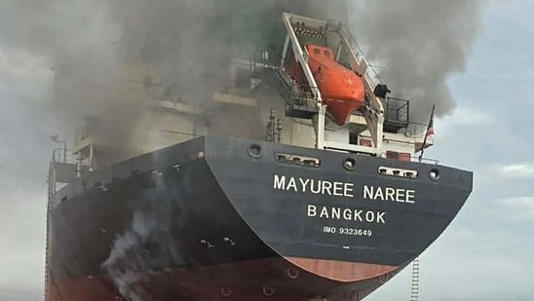
New Delhi (Gurpreet Singh)— The Government of India issued a stern condemnation on Wednesday, March 11, 2026, following a targeted attack on a Thai-flagged cargo vessel in the Strait of Hormuz. The Ministry of External Affairs (MEA) expressed “deep concern” as the ongoing West Asia conflict increasingly shifts into a direct assault on global commerce, specifically endangering civilian seafarers and critical energy supply lines.
The vessel, identified as the Mayuree Naree, was reportedly transiting the strategically vital chokepoint on its way to the Kandla port in Gujarat when it was struck. While the specific nature of the ordnance used remains under investigation, the incident marks a dangerous escalation in the region’s maritime insecurity. The MEA noted with “deplore” that commercial shipping is being used as a pawn in military hostilities, stating that such actions “impede the freedom of navigation and commerce.”
Human and Economic Stakes
The attack hits close to home for New Delhi, not only because of the ship’s destination but due to the high density of Indian personnel in the area.
- Loss of Life: The MEA statement poignantly reminded the international community that “precious lives, including of Indian citizens, have already been lost” in previous phases of this conflict. Officials warned that the “intensity and lethality” of these maritime strikes are showing a worrying upward trend.
- Seafarers at Risk: According to latest government data, approximately 778 Indian seafarers are currently serving aboard 28 Indian-flagged vessels in the Persian Gulf. Thousands more are employed on international merchant ships, like the Mayuree Naree, making India one of the most vulnerable nations to maritime violence.
- Energy Security: As one of the world’s largest importers of crude oil, India relies on the Strait of Hormuz for a substantial portion of its energy needs. The blockade and subsequent attacks have already triggered a domestic LPG shortage and sparked volatility in retail fuel prices.
Calls for Maritime Restraint
India reiterated its long-standing position that critical global shipping corridors must remain neutral zones. “Targeting commercial shipping and endangering innocent civilian crew members should be avoided,” the MEA stated, urging all parties involved in the West Asia conflict to respect international maritime law.
The Indian Navy, which has already increased its presence in the Arabian Sea under Operation Sankalp, is reportedly on high alert following the Wednesday morning attack. With 38 Indian vessels currently facing delays or entrapment near the Persian Gulf, the government is under increasing pressure to ensure the safe passage of its citizens and the secure arrival of essential commodities at Indian ports.
