

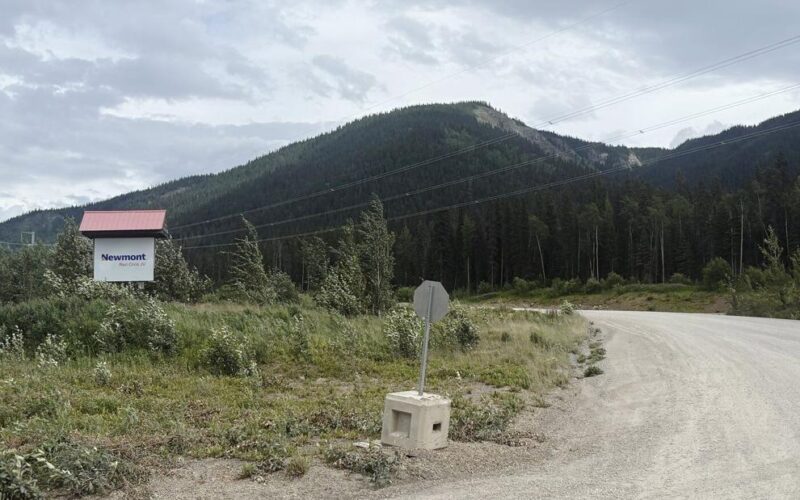
British Columbia (Richa Walia): The recent rescue operation at British Columbia’s Red Chris mine, which saw three workers brought to safety after being trapped underground for over 60 hours, is offering valuable insights for future emergency response efforts across the mining industry.
Mining company Newmont Corp., which operates the site, has pledged a full investigation into the rockfall that led to the entrapment, aiming to identify causes and prevent similar incidents. Experts say the findings will not only help improve safety protocols at Red Chris, but across the entire sector.
Danny Taillefer, Deputy Chief Mine Rescue Officer at Ontario Mine Rescue, emphasized the importance of transparency. “Even a successful rescue has its ups and downs. There’s always something that can be improved. So why not let others learn from it?” he said. Taillefer, who was involved in the 2021 rescue of 39 miners at Vale’s Totten mine in Sudbury, Ontario, followed the B.C. incident closely and expressed relief at the safe outcome.
During the ordeal, the three trapped workers took shelter in a steel refuge station located 280 metres underground after the initial collapse. A second rockfall cut off their communication, increasing concerns about their safety. They were eventually rescued late Thursday.
Taillefer noted that while rescues can be emotionally intense, the sense of relief that follows is immeasurable. Reflecting on his own experience, he said, “When you finally see the last person hug their loved one at the surface, that moment makes everything worth it.”
Newmont has confirmed that while open-pit operations have resumed, all underground work at Red Chris remains suspended until the internal investigation is complete. Bernard Wessels, Newmont’s Global Safety Chief, acknowledged that while rockfalls are rare at Red Chris, they are a recognized risk in the mining industry. He said the company maintains strict safety standards and controls to address such risks.
British Columbia Mines Minister Jagrup Brar announced that the province’s chief inspector of mines has also launched an official investigation. Both reports will be made public to promote industry-wide learning.
According to Wessels, the tunnel where the rockfall occurred had passed routine inspections and had no previous fall-of-ground incidents.
Dwayne Tannant, a professor of geotechnical engineering at the University of British Columbia’s Okanagan campus, believes the mining industry’s commitment to safety is what keeps operations secure. “Safety comes down to culture,” he said. “We do have a very safety-conscious culture, both on the surface and underground.”
As demand for critical minerals like copper continues to rise in response to global electrification efforts, mining is poised to expand rapidly. Tannant warned that while rockfalls are an inherent risk, their likelihood can be reduced through robust safety practices and vigilance.
The Red Chris rescue has not only delivered a happy ending—it has also provided an opportunity to strengthen safety frameworks and reaffirm the industry’s responsibility to protect its workers.
