

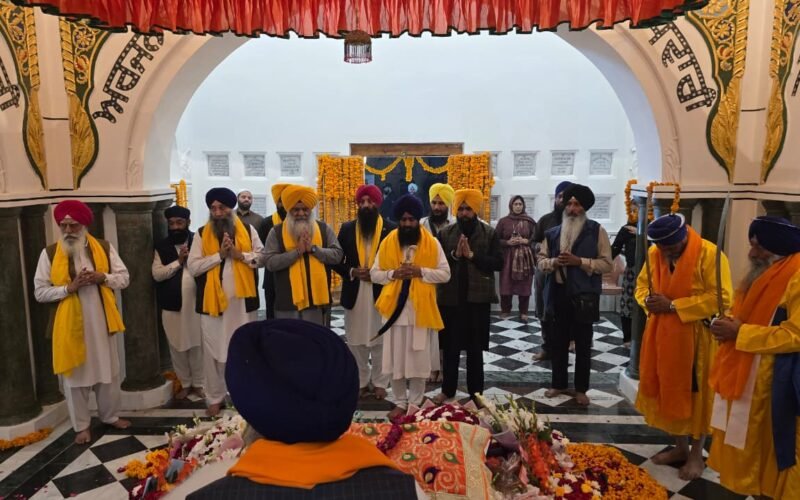
Naushera Virkan, Gujranwala (Gurpreet Singh): An important chapter in Sikh heritage was revived on Saturday as the historic Gurdwara Patshahi Chhevin Khara Sahib (Bhai Ke Mattu), located in the Naushera Virkan area of Pakistan’s Gujranwala district, reopened after remaining closed for nearly 80 years following the 1947 Partition of Punjab.
The gurdwara, associated with the visit of the sixth Sikh Guru, Sri Guru Hargobind Sahib, had fallen into a deteriorated condition after decades of neglect. Following extensive restoration and conservation work, the shrine has once again been opened for devotees, with the sacred Sri Guru Granth Sahib installed and Sikh congregational activities resumed.
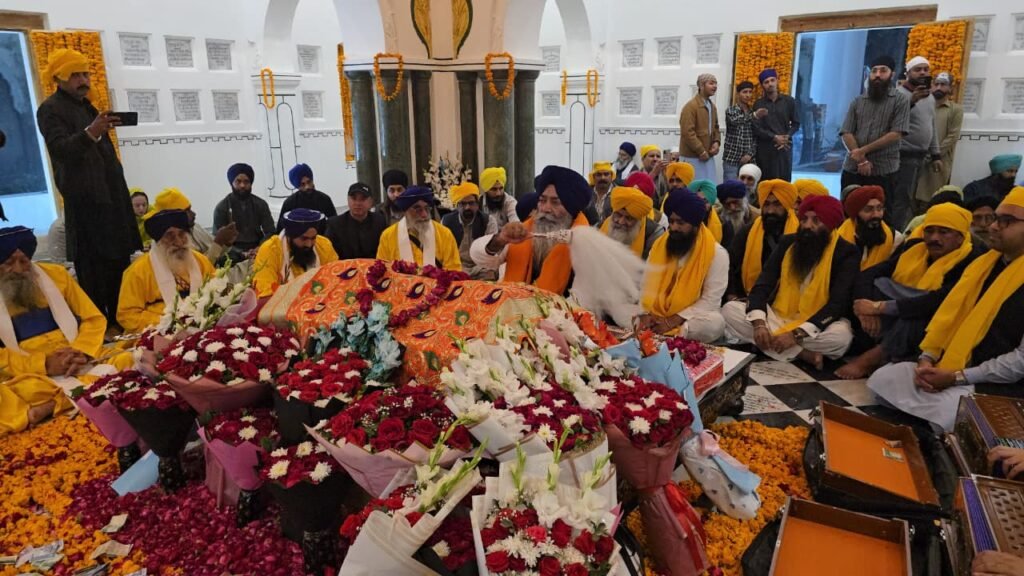
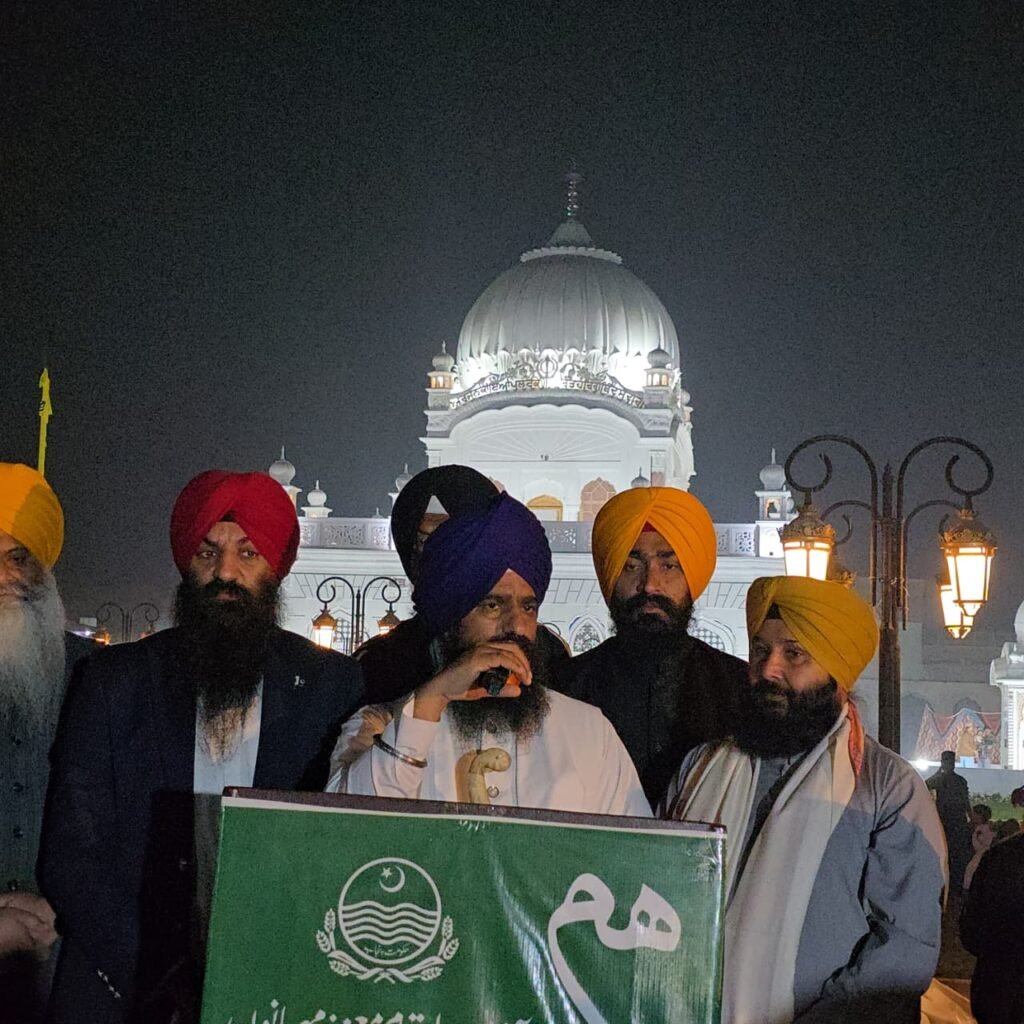
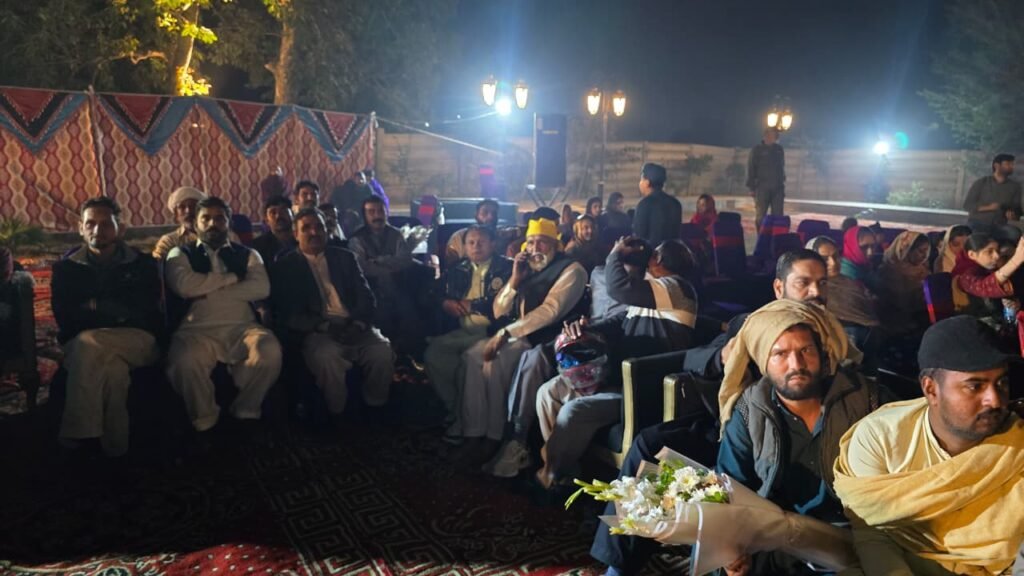
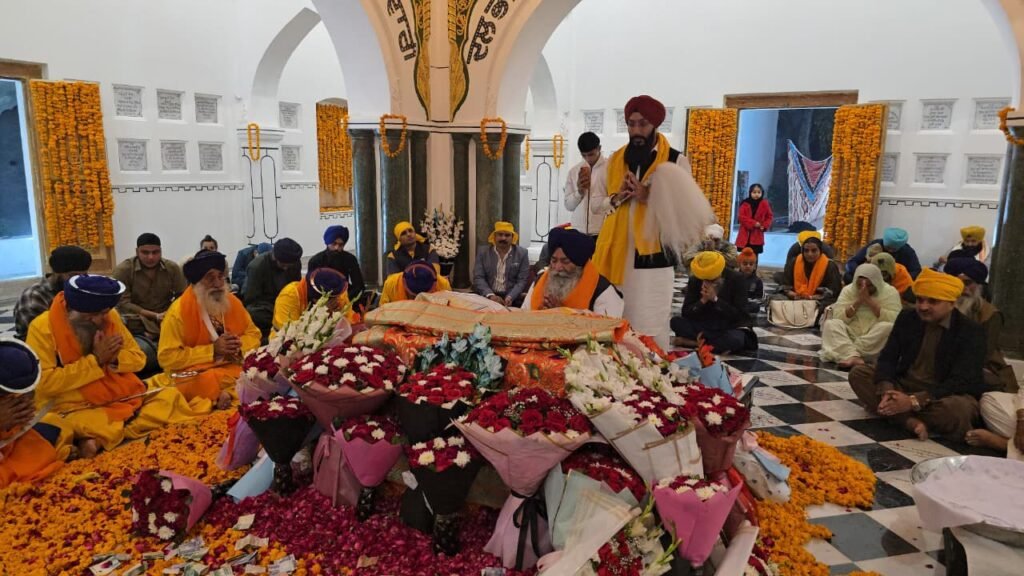
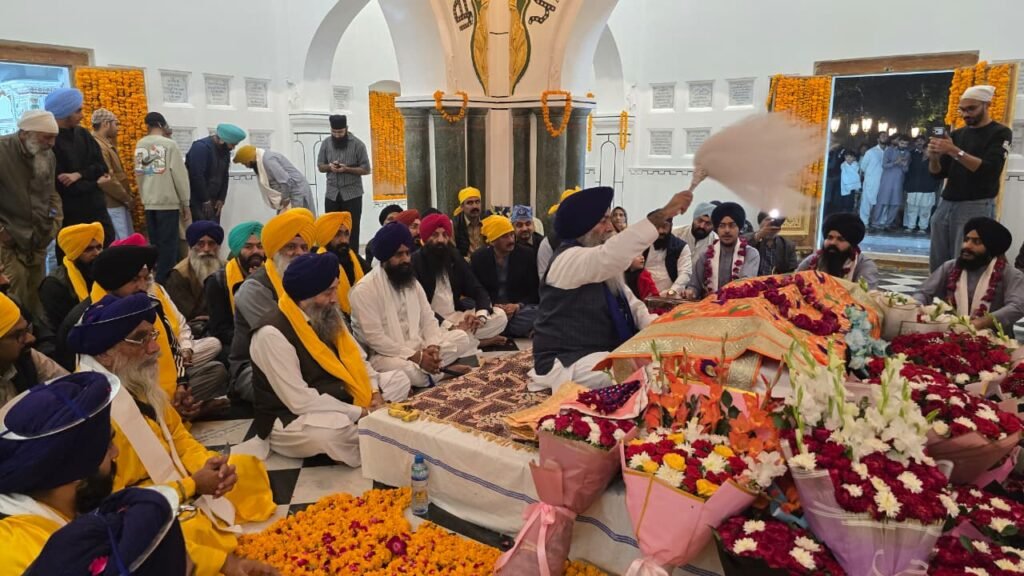
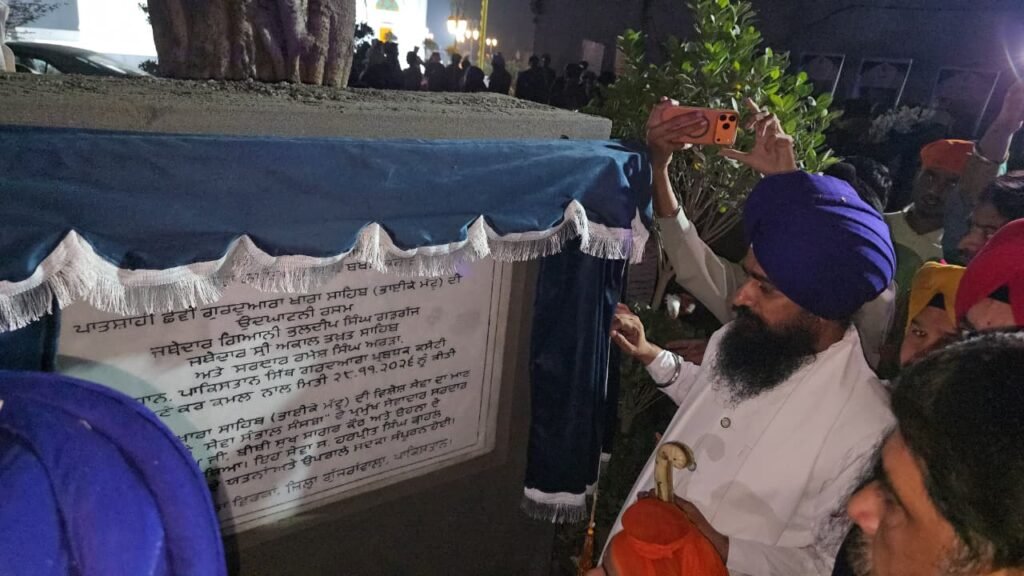
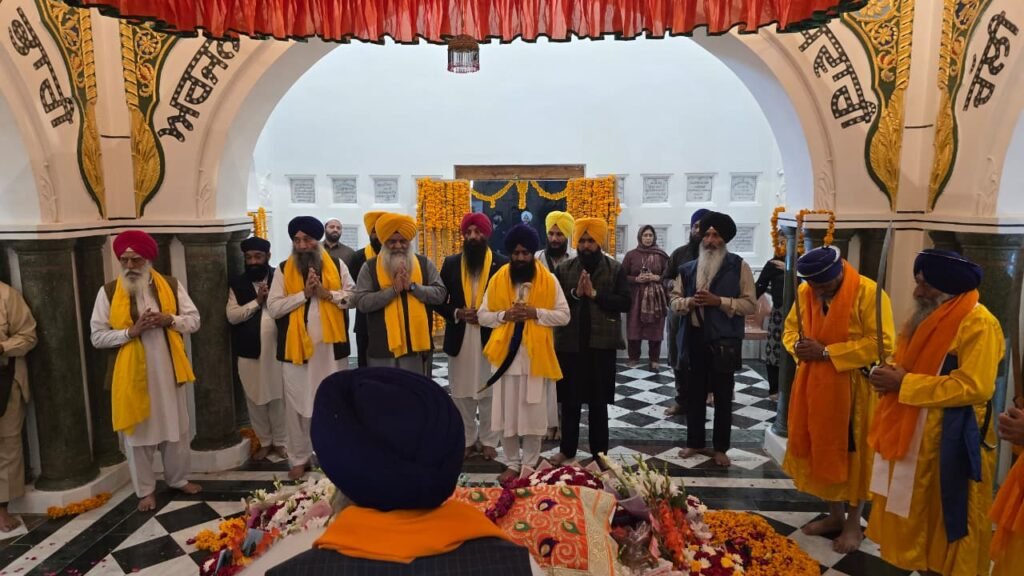
The reopening is being described as a significant occasion in Pakistan’s Sikh history, as it marks the first time that the formal inauguration of a gurdwara restored after a prolonged closure has been conducted by the Jathedar of Sri Akal Takht Sahib.
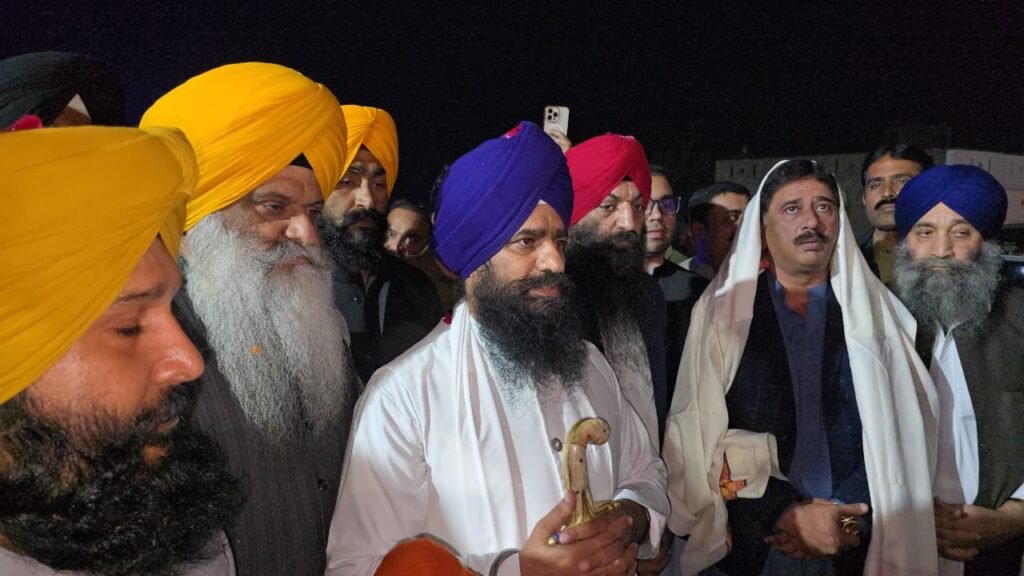
The inauguration ceremony was led by Giani Kuldeep Singh Gargaj, Jathedar of Sri Akal Takht Sahib, along with Sardar Ramesh Singh Arora, President of the Pakistan Sikh Gurdwara Parbandhak Committee and Minister for Minority Affairs in the Punjab government of Pakistan. Member of the National Assembly from Naushera Virkan, Azhar Qayyum Nahra, and Assistant Commissioner Ahmed Iqbal were also present.
Historic association with Guru Hargobind Sahib
According to historical accounts, Sri Guru Hargobind Sahib visited the site in 1620 while returning from his journey to Kashmir. The Guru is believed to have stayed there for approximately a month and spread the teachings of Sikhism.
A local Pandit became a follower of Guru Hargobind Sahib and was given the title of Bhai. Historical accounts also associate the Guru’s wedding procession with this area, as it passed through the location on its way to the village of Mariali. The shrine consequently came to be remembered as Gurdwara Khara Sahib.
The permanent building of the gurdwara was constructed by local residents between 1940 and 1945. Mai Sejo, a resident of the village, also built a permanent sarovar at the site. From 1900 until the Partition in 1947, the continuous prakash of Sri Guru Granth Sahib was maintained at the gurdwara. An annual religious fair was organised on the fifth, sixth and seventh days of the month of Sawan, and the shrine was under the management of the Shiromani Gurdwara Parbandhak Committee (SGPC).
The complex also houses an old memorial associated with Bhai Jaspat Ji, which has been restored in its original form. Bhai Jaspat Ji is remembered for arranging provisions from nearby villages during difficult times, preparing langar and carrying it into the forests to serve the Singhs. He was also associated with the construction work of the Manji Sahib and the dome of the gurdwara.
Restoration preserves original heritage
The conservation and restoration work was undertaken by the organisation Seva Sambhal, led by Barjinder Singh Hussainpur, son of SGPC member Mohinder Singh Hussainpur, and Bibi Sukh Sagar Kaur. Their family members, Mata Sukhwinder Kaur and Bibi Harjit Kaur, also contributed to the initiative.
The project was completed through the efforts of Harpreet Singh Kahlon of Adabi Baithak and with the support of the Sikh sangat, the Evacuee Trust Property Board (Auqaf Board) and the Punjab government of Pakistan. The National College of Arts, Lahore, provided advisory assistance during the conservation process.
Special care was taken to retain the historic appearance of the shrine. Traditional architectural features, old stones and decorative work were preserved, with restoration carried out in consultation with experts from the National College of Arts. The old memorial of Bhai Jaspat Ji was also revived in its original form.
Sikh devotees from different parts of Pakistan, India, Malaysia and other countries travelled to the shrine to witness the historic reopening.
Prayers and installation of Guru Granth Sahib
Before the formal inauguration, Giani Kuldeep Singh Gargaj performed an ardas in the presence of the Panj Pyare, praying for the restoration of other historic Sikh shrines separated from the community following Partition. He also prayed for the continued prosperity of the Sikh Panth, peace and progress in both East and West Punjab, and lasting harmony among all communities living in the region.
The sacred saroop of Sri Guru Granth Sahib was brought from Gurdwara Janam Asthan Sri Nankana Sahib and installed at Gurdwara Khara Sahib. Following the recitation of Sodar Rehras Sahib, a religious congregation was held, during which Gurbani kirtan was performed.
The visiting Jathedar and Ramesh Singh Arora received a warm welcome from the Sikh sangat, local residents and the administration. Flowers were showered on them and bouquets were presented as they arrived at the historic shrine.
A gathering was subsequently organised in the gurdwara’s park, where prominent personalities were also honoured.
Jathedar calls for restoration of other historic Sikh shrines
Addressing the gathering, Giani Kuldeep Singh Gargaj congratulated the entire Sikh Panth and the people of the region on the reopening of the gurdwara. He recalled that he had visited the site in 2024 at the suggestion of Akali leader Paramjit Singh Sarna, following which efforts to restore the shrine were initiated.
He said that Sri Guru Hargobind Sahib, the embodiment of Miri and Piri, had visited this region. During the 1947 Partition, the Sikh community was separated from numerous historic gurdwaras, and devotees continue to pray every day for the opportunity to visit those shrines freely.
“After 80 years, the sacred prakash of Sri Guru Granth Sahib has once again taken place at this historic site in Bhai Ke Mattu village of Naushera Virkan, and Gurdwara Patshahi Chhevin Khara Sahib has reopened,” he said, expressing hope that the shrine would bring peace, prosperity and stronger community relations to the area.
The Jathedar emphasised that historic gurdwaras separated from the Sikh community would not return on their own, and that Sikhs must take the initiative to reach these places and ensure their preservation. He called for dedicated efforts to protect Sikh religious heritage in West Punjab.
Praising the restoration undertaken by Seva Sambhal, he said the organisation had made commendable efforts to retain the shrine’s original character. He particularly appreciated the preservation of traditional decorative work and old stones with the guidance of the National College of Arts, Lahore.
Giani Gargaj also stressed that historic gurdwaras should not be demolished and rebuilt in the name of kar seva without considering their heritage value. He said preserving the original architecture and historical character of such religious sites must remain a priority, adding that the Sikh community should be willing to make every necessary effort for heritage conservation.
Urges permanent arrangements for devotees
The Jathedar requested Ramesh Singh Arora and MNA Azhar Qayyum Nahra to ensure that Sikh pilgrimage groups visiting Pakistan in the future are also brought to Gurdwara Khara Sahib for darshan.
He said visits by Sikhs from across the world would enhance the importance of the area and contribute to its development. Wherever Sikhs go, he added, they carry the message of the welfare of all humanity.
He also urged the Pakistan Sikh Gurdwara Parbandhak Committee to ensure that the prakash of Sri Guru Granth Sahib continues permanently at the shrine. He called for the appointment of a granthi, raagis and sewadars according to the requirements of the gurdwara, along with proper management arrangements.
The Jathedar further appealed to the local administration to provide security arrangements at the shrine similar to those maintained at other Sikh religious sites in Pakistan. He described Bhai Ke Mattu village as a symbol of communal harmony and expressed hope that this spirit would continue.
Giani Gargaj appreciated Ramesh Singh Arora’s efforts to reopen historic gurdwaras that had remained closed for decades. He also thanked MNA Azhar Qayyum Nahra for hosting the visiting sangat, while expressing confidence that the local leadership would continue extending support to Sikh pilgrims in the future.
He concluded by thanking the district administration, devotees who travelled from different places and the entire Seva Sambhal team, particularly Barjinder Singh Hussainpur and his family, for their contribution to restoring the historic shrine.
