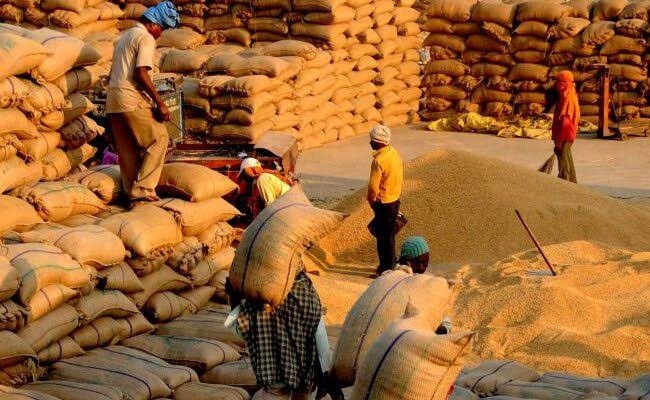
Chandigarh, October 23 — The Haryana government has transferred ₹9,029.39 crore directly into the bank accounts of farmers during the ongoing Kharif procurement season 2025–26, ensuring timely payment at the Minimum Support Price (MSP).
According to an official spokesperson from the Department of Food, Civil Supplies, and Consumer Affairs, the paddy procurement process is proceeding smoothly in all designated grain markets across the state. The spokesperson added that HAFED, Warehousing Corporation, and Food and Supply agencies are actively involved in paddy procurement, with directions issued to ensure farmers face no inconvenience while selling their produce.
The state is purchasing paddy from farmers registered on the ‘Meri Fasal Mera Byora’ portal. So far, paddy has been procured from 2,52,693 registered farmers. A total of 49.94 lakh metric tonnes of paddy has arrived in mandis across Haryana, out of which 48.44 lakh metric tonnes have already been purchased. Additionally, 40.22 lakh metric tonnes of paddy have been lifted from various mandis.
The state government has reiterated that all payments for procured paddy are being made directly to farmers’ bank accounts under the Central Government’s MSP scheme. The MSP for paddy remains unchanged at ₹2,389 per quintal.
Officials urged farmers to bring well-dried paddy with moisture content not exceeding 17 percent, as per Central Government standards, to ensure fair and timely payments. The government has made robust arrangements for procurement and transportation, accelerating the lifting process from mandis.
Infrastructure facilities such as electricity, clean drinking water, and sanitation in mandis are being regularly maintained. The spokesperson also stated that district administrations have been instructed to inspect grain markets frequently to prevent any inconvenience to farmers.
Meanwhile, cleaning of paddy brought to mandis and procurement centers is being managed by commission agents, while the government bears the cost of labor charges for filling, weighing, stitching, and loading activities at procurement centers.
Haryana Transfers ₹9,029.39 Crore Directly to Farmers’ Accounts During Kharif Procurement Season
 0 Comments