

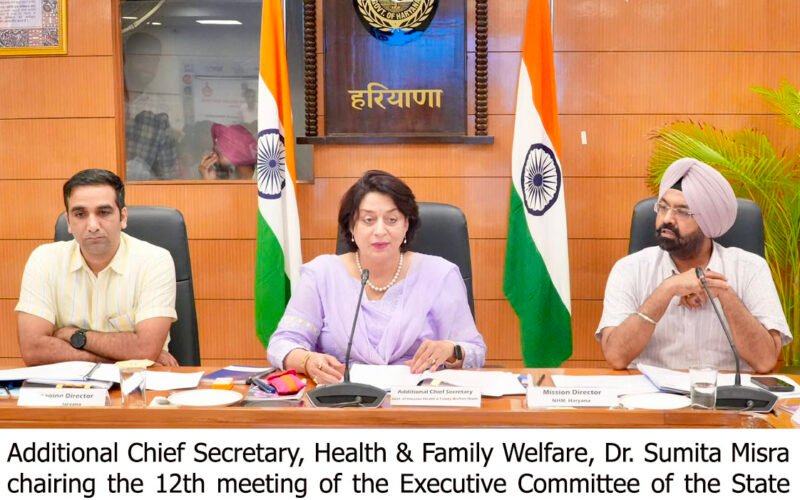
Chandigarh (Balwinder Singh): The Haryana government is undertaking a significant expansion of maternal, neonatal, and child healthcare services across the state, with authorities directing the fast-tracked construction of eight dedicated Maternal and Child Health wings and the conversion of all Special Newborn Care Units into Mother-Newborn Care Units by November 1. The directives were issued by Additional Chief Secretary of the Health and Family Welfare Department Dr. Sumita Mishra while presiding over the 12th Executive Committee meeting of the National Health Mission’s State Health Society.
The transition from SNCUs to the integrated MNCU model aims to ensure that mothers and their newborn infants remain together during specialized treatment, fostering zero separation and improving recovery outcomes. Haryana currently operates 29 Special Newborn Care Units, 62 Newborn Stabilization Units, and 527 Newborn Care Corners across its healthcare network. Dr. Mishra instructed officials to meet the November 1 deadline for the planned transition while expediting work on the eight dedicated MCH wings to expand specialized infrastructure in public hospitals.
The review meeting also highlighted progress in strengthening First Referral Units to provide prompt emergency obstetric and neonatal care, with the number of designated FRUs increasing from 40 to 100 statewide. Key health indicators have shown substantial improvement, with the Maternal Mortality Ratio declining from 127 to 94 and the Neonatal Mortality Rate dropping from 26 to 17. The department has further bolstered clinical capacity through the recruitment of 38 specialist doctors across pediatrics, gynecology, general medicine, and anesthesia.
To enhance service accessibility, Dr. Mishra instructed officials to expand the reach of dedicated women’s clinics and establish child care centres across all district hospitals to support working female staff and visiting mothers. The administration will also implement structured training modules for grassroots ASHA workers to improve high-risk pregnancy tracking and roll out an annual continuous medical education calendar to advance the clinical skills of doctors, nurses, and paramedical personnel across the state.
