


Calgary (Rajeev Sharma): Every July, the city of Calgary transforms into a celebration of Western heritage, culture, and community as millions of visitors gather for the world-famous Calgary Stampede. Known as “The Greatest Outdoor Show on Earth,” the Stampede is far more than a rodeo it is a symbol of Alberta’s pioneering spirit, Indigenous heritage, agricultural roots, and multicultural identity. What began as one man’s bold vision in 1912 has grown into one of Canada’s most iconic festivals and one of the largest outdoor events in the world.
The remarkable story of the Calgary Stampede began with Guy Weadick, an American trick roper, cowboy, and vaudeville performer who dreamed of creating the greatest rodeo and frontier exhibition ever seen. Believing Calgary was the ideal location because of its strong ranching culture and Western traditions, Weadick sought financial backing for his ambitious idea. His dream became a reality when four influential Alberta ranchers Pat Burns, George Lane, E.A. Cross, and Archie McLean agreed to support the project. Collectively known as “The Big Four,” they each invested $20,000, a remarkable amount at the time, laying the foundation for what would become an internationally recognized celebration of the West.
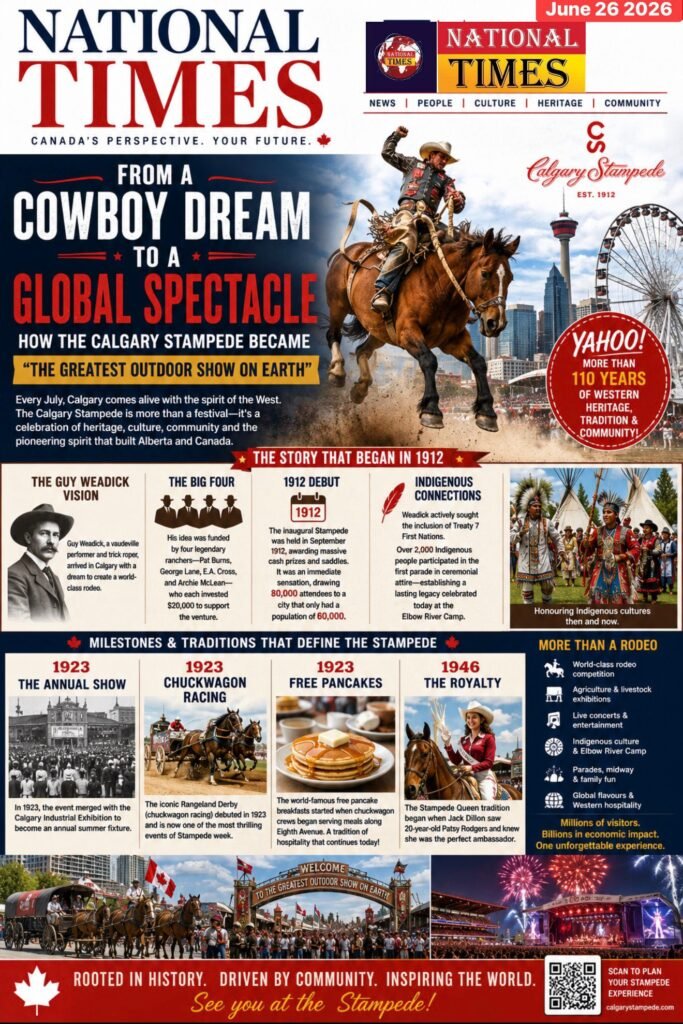
The first Calgary Stampede was held in September 1912 and exceeded every expectation. Featuring world-class rodeo competitions, thrilling exhibitions, livestock shows, and substantial cash prizes, the event attracted approximately 80,000 visitors, despite Calgary having a population of only about 60,000. The overwhelming success confirmed that Weadick’s vision had captured the imagination of people across North America. One of the most significant aspects of the inaugural Stampede was its relationship with the Treaty 7 First Nations. At a time when Indigenous people faced strict federal restrictions on leaving their reserves, Guy Weadick actively encouraged their participation, recognizing that Indigenous cultures were an essential part of the history and traditions of the Canadian West.
More than 2,000 Indigenous participants took part in the first Stampede parade wearing traditional ceremonial regalia, sharing their cultures with visitors from around the world. This partnership established a tradition that continues today through the Elbow River Camp, where members of the Treaty 7 Nations welcome visitors with cultural performances, traditional tipis, storytelling, dance, music, and educational experiences that celebrate Indigenous history and living traditions.
The Calgary Stampede entered a new chapter in 1923 when it merged with the Calgary Industrial Exhibition, transforming it into an annual summer event. That same year introduced several traditions that remain among the festival’s biggest attractions today. One of those traditions was the introduction of the Rangeland Derby, the world-famous chuckwagon races that have become one of the Stampede’s signature evening events. Known for their speed, excitement, and competitive spirit, the races continue to attract thousands of spectators every year.
Another beloved tradition also began in 1923 the free pancake breakfast. Chuckwagon crews started serving pancakes to the public along Calgary’s Eighth Avenue, creating a spirit of hospitality that has become synonymous with Stampede week. Today, hundreds of free pancake breakfasts are hosted across Calgary by businesses, community organizations, politicians, and volunteers, serving tens of thousands of residents and visitors.
The Stampede’s rich traditions continued to evolve after the Second World War. In 1946, Arena Director Jack Dillon noticed 20 year old Patsy Rodgers confidently leading horses to the river and immediately recognized her as the ideal ambassador for the event. That spontaneous moment led to the creation of the Calgary Stampede Queen tradition, with the Queen and Princesses continuing to represent the Stampede across Canada and internationally while promoting Western heritage, leadership, and community service. Over more than a century, the Calgary Stampede has expanded far beyond rodeo competitions. Today it features agricultural showcases, live concerts, Indigenous cultural programming, midway attractions, family entertainment, international food experiences, educational exhibits, and one of North America’s largest parades. Every year, millions of visitors generate significant economic benefits for Calgary and Alberta through tourism, hospitality, retail, transportation, and local businesses.
Despite its global success, the Stampede remains deeply rooted in its founding values celebrating the courage of ranchers, cowboys, farmers, Indigenous communities, volunteers, and generations of Albertans who have shaped the province’s identity. It continues to honour the traditions of the past while embracing innovation, diversity, and community spirit.
More than 110 years after Guy Weadick shared his dream with the Big Four, the Calgary Stampede stands as one of Canada’s greatest success stories, a festival where history meets modern entertainment, cultures come together, and millions experience the enduring spirit of the Canadian West.
