

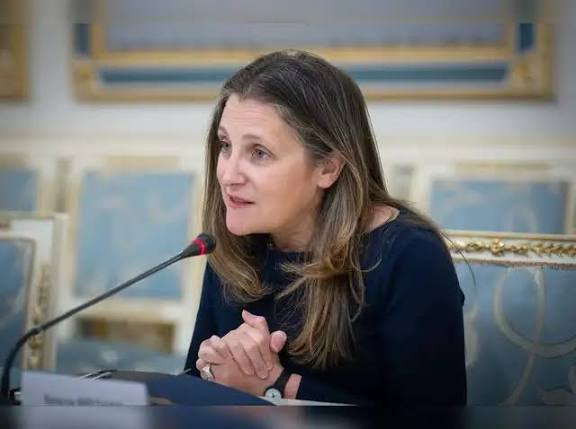
Ottawa, January 10, 2026: Former cabinet minister Chrystia Freeland formally vacated her seat in the House of Commons on Friday, temporarily reducing the Liberal government’s strength at a time when it is operating just short of a parliamentary majority.
Freeland’s resignation comes amid an already shifting balance in the Commons. When Parliament rose for the winter break in December, the Liberals had gained ground after former Conservative MP Michael Ma crossed the floor to join the governing party on the final sitting day. His move followed an earlier defection by Chris d’Entremont in November, bringing Prime Minister Mark Carney’s government to within a single seat of a majority.
With Freeland stepping down, the Liberals are now again one MP further from that threshold, at least until a byelection is held. Freeland’s former riding has long been considered a Liberal stronghold, but the seat is expected to remain vacant when MPs return to Ottawa later this month.
Under parliamentary rules, the Speaker of the House must first notify the chief electoral officer that the seat is vacant. The government then has between 11 and 180 days to call a byelection. Given that byelection campaigns must run for a minimum of 36 days, the earliest vote is likely to take place in late February, followed by a formal certification process before the successful candidate can take their seat.
The loss of even a single vote carries weight in the current Parliament. This was underscored during the fall session, when the Liberals narrowly survived a confidence vote on their main budget motion. Looking ahead, the government is guaranteed to face another confidence test before the end of March on spending estimates. In addition, the budget implementation bill, currently set for committee study this winter, will require a third-reading vote in the House, which would also be treated as a matter of confidence.
Freeland announced earlier this week that she had accepted a voluntary advisory role with Ukrainian President Volodymyr Zelenskyy, signalling her exit from Canadian politics. Her departure may not be the only one. Prime Minister Carney has indicated that several byelections could be on the horizon, though he has not named specific ridings.
Media reports suggest that former cabinet ministers Jonathan Wilkinson of British Columbia and Bill Blair of Toronto may be appointed to diplomatic roles, a move that would require them to resign their Commons seats. Both ridings are seen as safe Liberal territory, but any resignation would trigger additional byelections and further test the government’s numbers.
Meanwhile, speculation continues over potential floor crossings. Conservative MP Matt Jeneroux is expected to vacate his seat later this year, though he has ruled out joining the Liberals and has announced plans to leave politics altogether. Carney has acknowledged that some opposition MPs are considering crossing the aisle, arguing that the country’s challenges demand cooperation rather than partisanship.
New Democratic Party MP Lori Idlout confirmed this week that she had been approached about joining the Liberals, but said she has decided against it for now.
As the winter sitting approaches, the Liberal government’s slim margins mean every vote in the House will remain critical.
