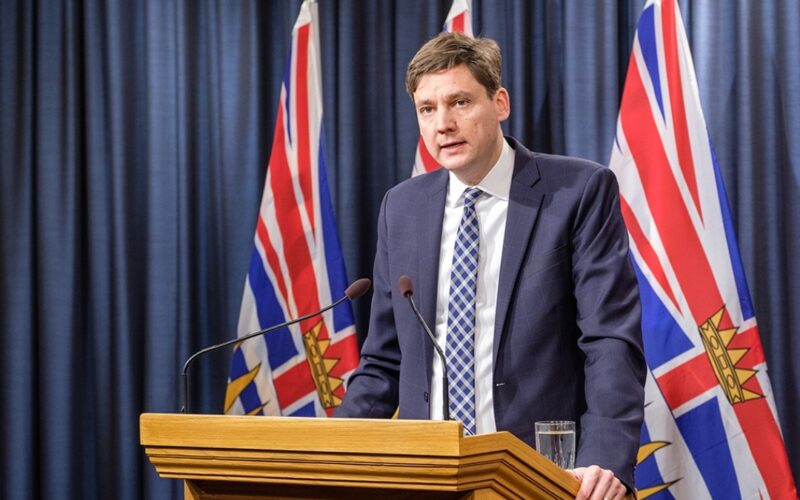
Vancouver (Rajeev Sharma): British Columbia Premier David Eby has stressed that sustained federal investment in provincial transportation infrastructure is critical to preventing long-term disruptions to cross-Canada trade and maintaining business confidence in the province.
Eby said he raised concerns over “trade-enabling infrastructure” during a meeting with the federal government’s major projects office, pointing specifically to Highway 1 through the Fraser Valley and the Massey Tunnel, both of which are crucial for commuters and freight movement to coastal ports. His remarks come days after severe flooding forced the closure of sections of Highway 1, exposing vulnerabilities in one of the country’s most important trade corridors.
Warning of serious consequences if the issues are not addressed, Eby said prolonged disruptions could last for months and significantly affect national supply chains. He cited recent decisions by companies such as Saskatchewan-based Nutrien, which has begun routing potash exports through Washington state ports instead of British Columbia, as an example of the economic risks posed by unreliable infrastructure.
Abbotsford Mayor Ross Siemens echoed these concerns, urging the federal government to prioritise flood-mitigation projects. He said the absence of adequate infrastructure investment leaves both provincial and national economies exposed to repeated shocks. Siemens renewed calls for Ottawa to recognise the Highway 1 corridor as more than a roadway, noting it also supports critical gas pipelines and fibre optic networks.
Recent storms caused the Nooksack River in Washington state to overflow, sending floodwaters north into the Fraser Valley and inundating homes and farmland. Eby said the incident underlined the urgent need for federal involvement to address cross-border water risks and long-term flood protection.
Calling Highway 1 flood mitigation a potential nation-building project, Siemens highlighted the route’s importance to more than 90,000 vehicles that pass through Abbotsford daily, as well as its role in the Asia-Pacific Gateway and Canada’s broader trade network. He said protecting the highway is essential for food security, supply-chain resilience and economic stability.
Eby said he plans to raise the issue again when premiers meet Prime Minister Mark Carney later this week, arguing that transportation infrastructure must be a top priority if the federal government wants to boost exports through Canadian ports. He added that addressing bottlenecks in British Columbia would require focused attention and strong federal leadership.
While four B.C. projects, including LNG Canada Phase 2 in Kitimat and the expansion of the Red Chris Mine, have been listed as nation-building initiatives by Ottawa, Eby said more needs to be done to safeguard critical transportation routes that underpin trade and economic growth.
Federal Investment Vital to Protect B.C. Trade Corridors, Says Premier David Eby
 0 Comments