

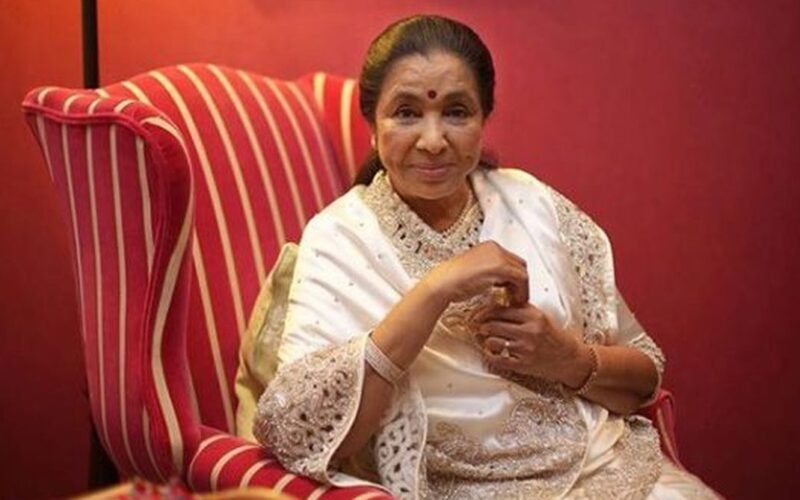
Mumbai (Rajeev Sharma): The passing of Asha Bhosle at the age of 92 marks the end of a defining chapter in Indian music. With her, the last surviving voice of Bollywood’s golden era falls silent—an era shaped by legends like Lata Mangeshkar, Mohammed Rafi, Mukesh, and Kishore Kumar.
Her life was not just about music; it was about perseverance, reinvention, and ultimately, triumph over identity and expectation.
A Childhood Rooted in Music, A Career Born Early
Asha Bhosle began her musical journey at the age of nine in 1943, stepping into an industry that was already beginning to recognise her elder sister, Lata Mangeshkar, as a rising star. The contrast between the two careers became evident early on.
While Lata quickly became the preferred voice of leading composers, Asha had to work her way through smaller opportunities. She sang tirelessly, taking up assignments that came her way, slowly building her presence in an industry that often compared rather than celebrated individuality.
Living in the Shadow—and Breaking Free
Throughout the 1950s, Asha was often labelled simply as “Lata’s younger sister.” Despite her talent, she was frequently limited to specific types of songs—primarily dance numbers and cabaret-style tracks.
However, what many saw as a constraint, Asha turned into her defining strength. As new composers entered the scene, they began experimenting with different sounds and styles—and Asha became their voice of choice. She embraced these opportunities wholeheartedly, gradually crafting an identity that was bold, modern, and unmistakably her own.
The Undisputed Queen of Dance Numbers
By the 1960s and 70s, Asha Bhosle had become synonymous with high-energy, expressive songs that redefined Bollywood music. Tracks like Piya Tu Ab To Aaja, Dum Maaro Dum, O Haseena Zulfowali, and Yeh Mera Dil turned into iconic anthems.
Her voice became inseparable from the performances of screen legend Helen, adding charisma and rhythm to some of Indian cinema’s most memorable sequences. In an era where such songs were often seen as unconventional, Asha elevated them into art.
For nearly two decades, if a film required a song that demanded flair, attitude, and vibrancy, Asha Bhosle was the first choice.
Silencing Critics with Versatility
Despite her success, a perception persisted that Asha’s strengths lay only in upbeat numbers. Many believed she lacked the depth for more classical or emotionally complex compositions.
She proved them wrong—decisively.
Her work in Umrao Jaan showcased her ability to render ghazals with elegance and depth, earning her a National Award and critical acclaim. Songs like Dil Cheez Kya Hai revealed a completely different dimension of her artistry.
Soon after, Mera Kuch Saamaan from Ijaazat further cemented her reputation as a versatile and sensitive performer, earning her another National Award and a new generation of admirers.
A Life of Courage and Unconventional Choices
Asha Bhosle’s personal life reflected the same boldness that defined her music. At just 16, she defied societal norms and married Ganpatrao Bhosle, a decision that went against her family’s wishes. The marriage, however, was short-lived and marked by difficulties.
She returned to her maternal home with children to raise, rebuilding her life and career from scratch. In 1980, she once again chose her own path, marrying composer R. D. Burman despite opposition and societal expectations.
Her life was a testament to resilience—navigating personal setbacks while continuing to achieve professional excellence.
An Era Defined—and Concluded
Asha Bhosle was part of a rare constellation of artists who defined Hindi cinema’s golden age. Alongside legends like Rafi, Mukesh, Kishore Kumar, and Lata Mangeshkar, she shaped the emotional and cultural soundscape of India for over five decades.
Over time, she outlived her contemporaries, becoming the last remaining voice of that extraordinary generation. With her passing, an era that once defined Indian music truly comes to a close.
A Legacy That Will Never Fade
Even in her later years, Asha remained deeply connected to music, performing on global stages and engaging with audiences across generations. Her ability to adapt to changing musical trends ensured her relevance in every decade she lived through.
Her songs continue to resonate—not just as melodies, but as memories woven into the lives of millions.
Asha Bhosle’s journey was not about stepping out of someone else’s shadow—it was about creating a legacy so vast that it cast its own.
As India bids farewell, it remembers a voice that was not only heard but felt—a voice that will echo through time, long after the silence she leaves behind.
