

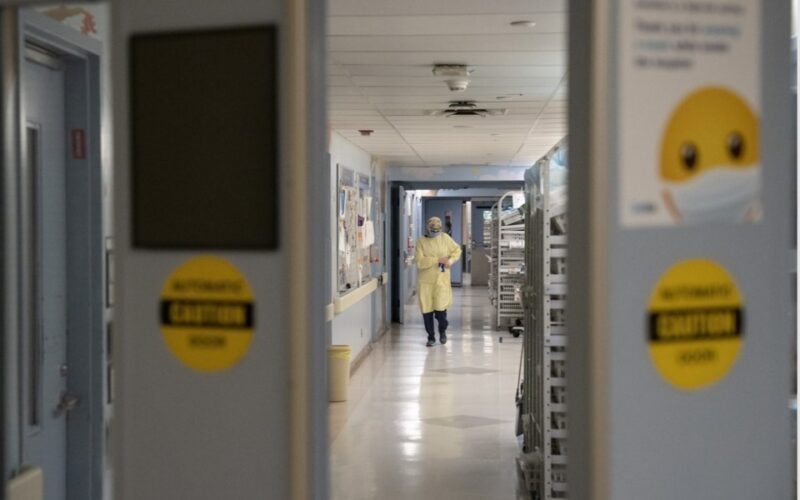
Toronto (Rajeev Sharma): A majority of Ontarians are facing prolonged delays when seeking diagnostic tests or specialist care, according to a new public opinion survey that highlights growing pressure on the province’s health-care system.
The poll, conducted by Abacus Data and released on Tuesday, found that long wait times are the norm rather than the exception. About one-third of respondents said they waited longer than six months to see a specialist or undergo a diagnostic procedure, while another 37 per cent reported delays ranging from three to six months.
These timelines stand in sharp contrast to provincial benchmarks. Ontario Health guidelines indicate that patients with non-urgent conditions should typically receive diagnostic scans within a window of two to 28 days, depending on medical priority.
Health experts say the issue extends beyond Ontario. Recent figures from the Canadian Institute for Health Information show that wait times for diagnostic imaging remain longer nationwide than they were before the COVID-19 pandemic, suggesting a system-wide backlog that has yet to be resolved.
The survey was commissioned by the Ontario College of Family Physicians, which represents more than 18,000 family doctors and medical learners across the province. The organization argues that lengthy waits are increasing patient anxiety and may lead to worsening health outcomes.
To address the problem, the group is advocating for a centralized, digital referral system that would allow family physicians to track referrals electronically and prioritize patients based on urgency. Such a system, they say, would improve coordination and reduce unnecessary delays.
The proposal appears to have strong public backing. According to the poll, 95 per cent of respondents support the introduction of a modernized referral platform. The Ontario Medical Association had previously called for a similar approach in 2023.
The survey gathered responses from 1,500 Ontario residents between November 20 and 27. As noted by the Canadian Research Insights Council, online polls do not carry a traditional margin of error because participants are not selected through random sampling.
