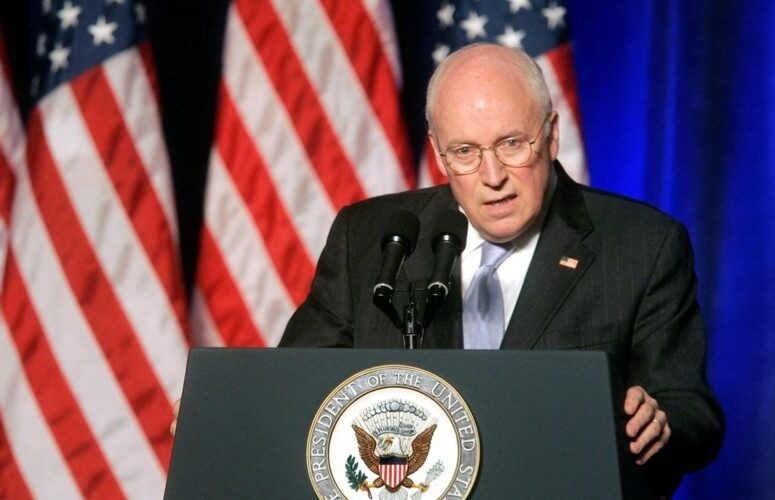
Washington— Dick Cheney, one of the most influential and controversial vice presidents in U.S. history and a key advocate for the Iraq invasion, passed away at 84. His family confirmed that he died Monday night due to complications from pneumonia and cardiac and vascular disease.
“For decades, Dick Cheney served our nation, including as White House Chief of Staff, Wyoming’s Congressman, Secretary of Defense, and Vice President of the United States,” the Cheney family said in a statement. “He was a great and good man who taught his children and grandchildren to love our country, live with courage and honor, and appreciate life’s simple joys like fly fishing.”
Cheney’s political journey spanned decades, serving under both George H.W. Bush and George W. Bush. As Secretary of Defense, he oversaw the Persian Gulf War, and later, as vice president, he became a dominant force in shaping U.S. policies after the September 11 attacks.
Known for his quiet but commanding influence, Cheney wielded immense power within the Bush administration, often guiding crucial decisions on national security, Iraq, and counterterrorism measures. He defended the government’s use of surveillance and detention tools introduced after 9/11, arguing they were vital for national safety.
Throughout his career, Cheney faced criticism for promoting the Iraq War based on flawed intelligence and for underestimating the post-invasion insurgency. Despite these controversies, he remained steadfast in his belief that his policies were right for America’s defense.
Cheney’s later years were marked by political isolation from his own party. His daughter, Liz Cheney, emerged as a prominent critic of Donald Trump, which led to public clashes between the former president and the Cheney family. In a striking political reversal, Cheney even declared support for Democrat Kamala Harris in her race against Trump.
A survivor of five heart attacks and a heart transplant, Cheney often described each new day as a “gift.” His vice presidency redefined the office, transforming it from a ceremonial role into a powerful hub of policymaking.
Known for his trademark half-smile—often described as a smirk—Cheney once joked about his secretive image: “Am I the evil genius in the corner that nobody ever sees come out of his hole? It’s a nice way to operate, actually.”
Cheney’s legacy remains deeply divisive—admired by conservatives for his unwavering conviction and condemned by critics for his role in one of America’s most controversial wars.