

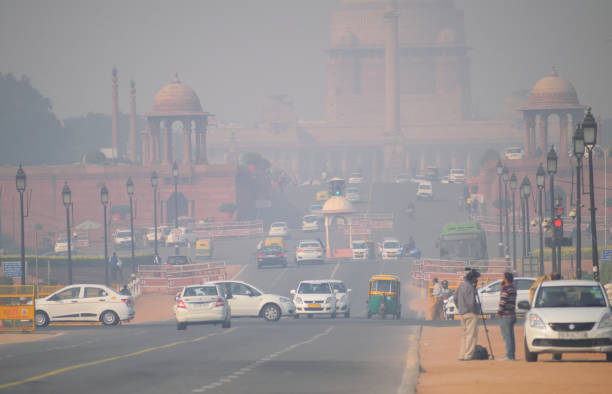
New Delhi (Rajeev Sharma): The national capital witnessed a marginal improvement in air quality on Saturday morning, but pollution levels remained in the ‘poor’ bracket, keeping Delhi-NCR residents under the lingering blanket of smog.
As per the Early Warning System for Delhi, the city’s average AQI stood at 257 around 5:30 a.m. — a minor improvement from 293 on Friday. Although the air showed signs of recovery over the past 24 hours, experts warn that the relief is temporary, with stagnant weather conditions and emissions from vehicles continuing to choke the city.
The haze that blanketed Delhi reduced visibility across several parts, including Dwarka, Rohini, and Punjabi Bagh. Officials from the Delhi Pollution Control Committee said a short burst of wind movement overnight may have dispersed pollutants slightly, but the air still poses health risks, especially for children, the elderly, and people with respiratory conditions.
“Despite the improvement, particulate matter levels remain well above safe limits,” said an environmental scientist from the India Meteorological Department (IMD). “Until stronger winds or rainfall occur, pollutants will continue to accumulate near the surface.”
According to the pollution monitor, Anand Vihar remained the city’s most polluted area with an alarming AQI of 411, falling in the ‘severe’ range. Localities such as Shadipur (328), Bawana (318), and Wazirpur (314) also recorded hazardous readings. Other residential pockets, including Vivek Vihar (300), Jahangirpuri (296), and Alipur (289), hovered between the ‘poor’ and ‘very poor’ categories.
The situation wasn’t much better in the satellite cities. Noida and Ghaziabad recorded AQI readings of 332 and 370, respectively, while Gurgaon and Faridabad reported slightly lower figures at 301 and 342.
Experts have attributed the pollution to a combination of factors — calm winds, ongoing construction activity, vehicular emissions, and smoke drifting in from neighbouring states due to crop residue burning.
Environmental groups have urged immediate action, including stricter checks on construction dust, industrial emissions, and the use of diesel generators. “The current air quality, though improved, is still far from safe. Authorities must act before conditions worsen further with the onset of winter,” said a Delhi-based environmental activist.
Officials have advised residents to avoid prolonged outdoor exposure and to use masks while commuting. With temperatures expected to drop in the coming days, the air quality is likely to deteriorate again, marking the beginning of yet another difficult pollution season for Delhi-NCR.
