

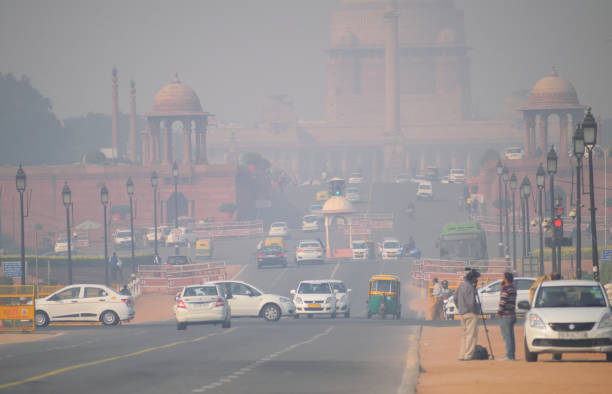
Delhi (Rajeev Sharma): Delhi continues to battle poor air quality, with the city’s pollution levels lingering in the “very poor” range on Monday. While the air remains harmful to health, the India Meteorological Department (IMD) has forecast light rain for later in the day, providing some hope for relief.
As of early morning, the minimum temperature in the capital was recorded at 17.3°C, just slightly above the average for this time of year. With skies expected to be partly cloudy, the maximum temperature is forecasted to reach around 29°C. The high humidity of 94% recorded at 8:30 AM made the air feel even heavier, exacerbating the discomfort caused by the polluted environment.
The Central Pollution Control Board (CPCB) reported severe pollution levels in several parts of Delhi. In particular, areas like Bawana and Anand Vihar registered an Air Quality Index (AQI) of 401 and 431, respectively, putting them in the “severe” category. These levels are considered hazardous to health, especially for vulnerable groups such as children, elderly individuals, and those with respiratory issues.
Of the 38 monitoring stations across Delhi, 23 reported AQI levels exceeding 300, categorizing the air quality as “very poor.” The overall situation is alarming, with little sign of improvement in the immediate future. On Sunday, Delhi saw a brief drop in AQI levels to 292 in the evening, down from 324 earlier in the day, but the air quality remained at hazardous levels for most of the day.
Pollution Levels and Health Risks
The CPCB defines AQI values ranging from 0 to 50 as “good,” and from 51 to 100 as “satisfactory.” However, readings above 300 are classified as “very poor” and “severe,” signifying a high risk of health problems, especially for people with pre-existing conditions like asthma or heart disease. The capital’s continued struggle with air pollution is putting immense pressure on both public health and the environment.
Though light rain is expected to provide some relief later in the evening, experts warn that it may not be enough to significantly improve the situation. Air quality may temporarily improve with rain, but the city’s overall pollution levels are unlikely to return to safe levels anytime soon.
In light of these conditions, health officials continue to advise Delhi residents to limit outdoor activities and avoid strenuous exercise. Vulnerable groups are urged to stay indoors, and everyone is encouraged to use air purifiers and wear masks when stepping outside.
With the persistent smog and poor air quality, the need for stronger pollution control measures remains pressing. The authorities are closely monitoring the situation, hoping the upcoming rain could offer at least a brief respite from the ongoing crisis.
