

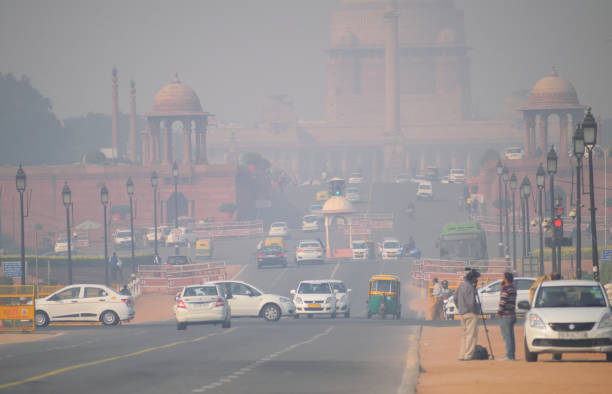
New Delhi (Rajeev Sharma): Diwali festivities in Delhi, traditionally marked by fireworks and celebrations, left the national capital grappling with severe air pollution, as most air quality monitoring stations recorded alarming figures. Despite the Supreme Court’s ruling allowing the use of only green firecrackers between 8 PM and 10 PM, the unregulated burst of firecrackers continued well beyond the designated time, sending the city’s air quality into a hazardous spiral.
According to data from the Delhi Pollution Control Committee (DPCC), a staggering 36 out of 38 air quality monitoring stations in Delhi registered pollution levels in the ‘red zone,’ signaling ‘very poor’ to ‘severe’ air quality. This marked a sharp deterioration in the air, exacerbating the already concerning pollution levels the city faces annually around Diwali.
While the Supreme Court’s directive aimed to curb the harmful effects of traditional firecrackers by restricting the use of firecrackers to a short window, the extension of celebrations well past the prescribed hours led to an overwhelming increase in particulate matter, particularly PM2.5 and PM10, which are known for their detrimental health effects. Experts say that even the “green” crackers, though comparatively less toxic, contribute significantly to the smog when used excessively in large volumes.
“The extension of firecracker usage beyond the allowed hours was a major contributor to the spike in pollution,” explained Dr. Rajeev Kumar, an environmental scientist. “Despite attempts to regulate the situation, the massive scale of firecracker use still resulted in a drastic increase in harmful particles in the air.”
Local authorities had hoped that the limited window for the use of green firecrackers would help mitigate the city’s worsening air quality, which regularly breaches safe levels, especially during Diwali. However, the celebrations spilled over, pushing air pollution levels into ‘severe’ categories, with particular concerns for vulnerable populations such as children, the elderly, and those suffering from respiratory conditions like asthma and COPD.
Health officials have expressed concern about the short-term and long-term effects of the pollution spike. With air quality deteriorating to levels considered hazardous, there have been calls for immediate public health measures, including staying indoors and wearing masks to reduce exposure to harmful particles.
Despite numerous efforts by the Delhi government in recent years to educate the public and regulate firecracker use, the city continues to see air quality plummet year after year during the festive season. Measures such as banning crackers in high-risk areas and introducing awareness campaigns have been only partially effective, as the cultural significance of fireworks remains deeply ingrained in Diwali traditions.
With Delhi’s air quality firmly in the ‘severe’ category, experts are urging the government to introduce stricter regulations for the next festival season and to ramp up enforcement measures to ensure compliance with firecracker usage laws. Environmental organizations are also calling for a deeper public dialogue about how to celebrate festivals sustainably while safeguarding public health and the environment.
As the city recovers from the impact of Diwali celebrations, the challenge remains to find a balance between tradition and public safety, and to mitigate the environmental toll of firecrackers, which continue to pose a significant threat to Delhi’s already fragile air quality.
