

New Delhi (Rajeev Sharma): Residents of the capital woke up to a warmer-than-usual morning on Sunday as the city recorded a minimum temperature of 20.6°C, which is 2.2 degrees Celsius above the seasonal average, according to the India Meteorological Department (IMD).
Humidity levels stood at 71% around 8:30 a.m., and the day is expected to remain clear, with the mercury likely to climb to a maximum of around 33°C later in the afternoon.
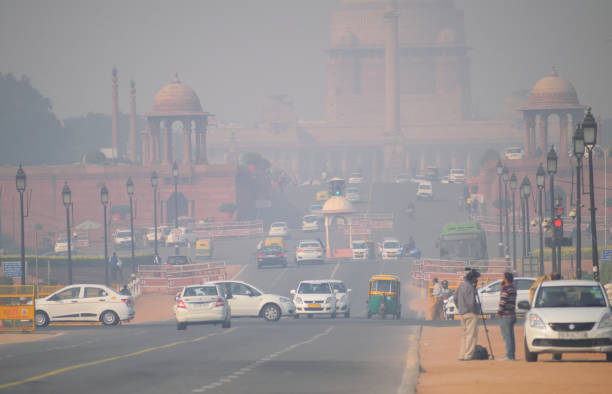
While the skies may remain cloud-free, Delhi’s air quality offered little to be optimistic about. Data from the Central Pollution Control Board (CPCB) placed the city’s overall Air Quality Index (AQI) at 284 as of 9 a.m., placing it firmly in the ‘poor’ category.
Pollution levels varied across neighborhoods, with 12 out of 38 monitoring stations reporting AQI figures in the ‘very poor’ range. Anand Vihar stood out with the highest reading at 430, bordering on the ‘severe’ zone. Wazirpur (364), Vivek Vihar (351), Dwarka (335), and RK Puram (323) also reported significantly polluted air.
Other locations such as Siri Fort, Jahangirpuri, Punjabi Bagh, and Nehru Nagar recorded AQI levels above 300, reflecting worsening air quality in various parts of the city.
For context, an AQI between 201 and 300 is considered ‘poor’, while values between 301 and 400 fall under the ‘very poor’ category. Readings beyond 400 are marked as ‘severe’, posing serious health concerns, especially for vulnerable groups like children, the elderly, and individuals with pre-existing respiratory issues.
With air quality typically dipping during this time of year due to a mix of weather patterns, vehicle emissions, and crop residue burning in neighboring states, health experts are advising residents to limit outdoor activity during peak pollution hours and consider wearing protective masks.
Officials have begun closely tracking pollution trends as the city heads into the post-monsoon season, a period historically marked by a sharp rise in smog and air-related health complaints.
