

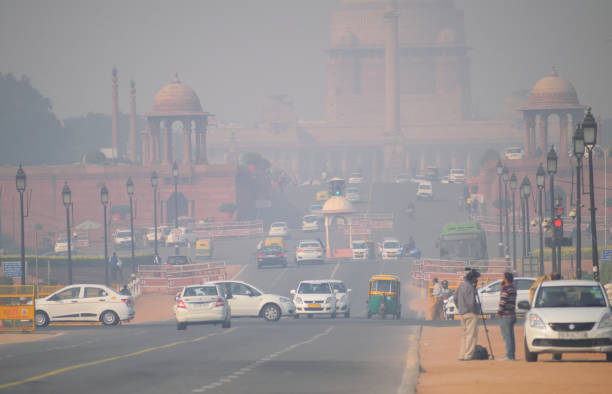
New Delhi (Rajeev Sharma): A thick veil of pollution settled over the capital on Friday morning, pushing Delhi’s air quality back into the “very poor” zone and leaving neighbourhoods across the city enveloped in a persistent layer of smog. Readings from the Central Pollution Control Board (CPCB) showed the average AQI at 323 by 8 am, signalling yet another day of hazardous conditions for residents.
City wakes up to hazy skies and low visibility
The morning commute was marked by reduced visibility in several areas, particularly in the eastern and northern parts of the city. Ghazipur, Akshardham, and neighbouring stretches reported dense haze, with commuters describing the skyline as “smoke-grey” even after sunrise.
Pollution levels varied across the capital but remained largely worrying.
- Anand Vihar: 348
- Wazirpur: 358
- Sonia Vihar: 343
- Bawana: 325
- NSIT Dwarka: 269
Bawana and Wazirpur were among the worst-hit regions, while Dwarka recorded relatively better air though still far from healthy.
Air quality shows marginal relief but smog lingers
Officials noted that pollution levels have eased slightly compared with the severe spikes earlier this month, but meteorological conditions—calm winds, low temperatures and moisture—are trapping pollutants close to the ground. The morning cloud of smog over riverbank and industrial areas is expected to persist through the day.
The Akshardham stretch, in particular, remained engulfed in a dense plume of airborne particles, with the AQI touching 348, adding to already deteriorating conditions in the area.
Understanding the AQI scale
The Air Quality Index, which ranges from 0 to 500, is divided into six health-based categories:
- Good (0–50): Minimal risk
- Satisfactory (51–100): Minor discomfort possible for sensitive individuals
- Moderate (101–200): Respiratory irritation for people with existing conditions
- Poor (201–300): Breathing discomfort for most people on prolonged exposure
- Very Poor (301–400): Increased likelihood of respiratory illness
- Severe (401–500): Dangerous for the general population
Readings across most of Delhi on Friday were clustered in the fifth category, raising concerns among doctors who say prolonged exposure at this level can affect even healthy individuals.
Government reviews strategy as pollution persists
As the capital continues to battle winter pollution, Chief Minister Rekha Gupta chaired a high-level review meeting on Wednesday to assess the city’s preparedness and ongoing mitigation steps. The discussions focused on dust control, vehicular restrictions under the Graded Response Action Plan, and coordination with neighbouring states to address crop-burning smoke.
Officials said that enforcement of pollution-control measures has been intensified, though the city may need stronger interventions if conditions worsen.
Residents brace for worsening conditions
With weather forecasts indicating little wind movement and stable atmospheric conditions over the coming days, experts warn that the smog may deepen before it clears. Health authorities have urged residents—especially children, seniors, and those with respiratory issues—to limit outdoor exposure and use protective masks.
For now, Delhi continues its annual battle with winter pollution, waking up once more under a blanket of toxic air that shows no sign of easing.
