

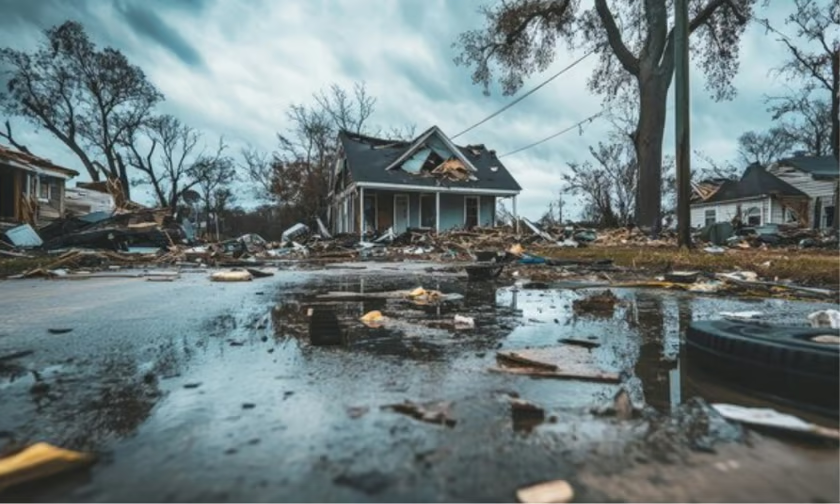
British Columbia (Rajeev Sharma): Severe storms and flooding that swept across southern British Columbia and parts of Alberta in December have resulted in significant insured damages, with estimates approaching $900 million, according to data from Catastrophe Indices and Quantification Inc. (CatIQ) cited by the Insurance Bureau of Canada (IBC).
The Fraser Valley was particularly hard-hit, accounting for roughly $74 million of the losses, primarily affecting homes and businesses. Floodwaters breached borders into Abbotsford-area neighborhoods and farmland, inundating poultry barns and prompting emergency evacuations, reports said.
IBC emphasized that these recurring flood events underline the urgent need for the province to accelerate investments in mitigation and resilience, four years after the devastating 2021 floods.
“Severe weather and flooding has once again disrupted the lives of residents and business owners across Southwestern BC and Vancouver Island,” said Aaron Sutherland, IBC’s vice-president for Pacific and Western Canada. “This most recent event is a stark reminder of the need to strengthen BC’s resilience and protect communities from the increasing risks posed by extreme weather.”
The bureau highlighted that B.C.’s flood strategy, drafted in the wake of the 2021 disaster, remains underfunded. IBC is urging the provincial government to prioritize flood-risk mapping, protective infrastructure, and incentives that help homeowners and businesses better prepare their properties for future events.
A provincial spokesperson noted that efforts are underway to work with affected communities, including Abbotsford, Merritt, and Princeton, to improve protections. “Our government is collaborating closely with hard-hit communities so people will be better protected from future flooding,” the representative said.
The December floods have reignited discussions among insurers and brokers about the availability of flood coverage and the importance of risk-reduction strategies in high-risk regions. Insured losses from the 2021 flooding were substantially higher, reaching $675 million, highlighting the recurring financial toll of such disasters.
“Investing in community resilience and damage prevention is always more cost-effective than rebuilding after every disaster,” Sutherland added. “By prioritizing risk reduction, the government can expand access to flood insurance, offering more robust support than the disaster assistance many high-risk homeowners currently rely on.”
The IBC’s warning comes as B.C. faces ongoing challenges from climate change-driven extreme weather events, underscoring the need for both immediate and long-term flood mitigation measures.
