

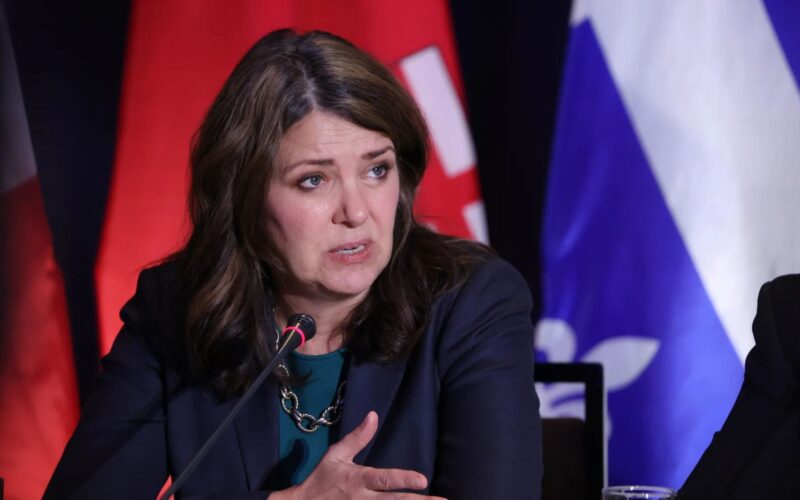
Alberta (Rajeev Sharma): Premier Danielle Smith is standing firm on her call for Alberta to gain greater authority over immigration, drawing both support and sharp criticism as the province prepares for a fall referendum that includes several immigration-related questions.
Speaking during her weekend radio program, Smith defended proposals that would significantly alter how newcomers access provincial services. The measures form part of a broader nine-question referendum scheduled for October, which the government says will give Albertans direct input on key policy directions.
Proposed Changes to Services and Voting Rules
Among the questions voters will consider is whether individuals with temporary immigration status should pay additional fees to access publicly funded health care and education. Another proposal would require non-permanent residents to live in Alberta for at least a year before qualifying for certain provincial benefits.
A separate question asks whether proof of citizenship should be mandatory when voting in provincial elections.
Smith argued that these ideas are aimed at ensuring sustainability in public services amid rapid population growth. “We want to make sure that the services funded by Alberta taxpayers are there for those contributing to the system,” she said, adding that the final decision will rest with voters.
Federal Policy Under Fire
The premier attributed much of Alberta’s recent population surge to what she described as relaxed federal immigration policies under former prime minister Justin Trudeau. Over the past four years, Alberta’s population has grown by roughly 600,000 people — growth Smith says has placed strain on health care, education and social programs.
She pointed to Quebec’s immigration framework as a model, arguing that Alberta should have similar authority to select economic migrants aligned with provincial labour needs.
According to Smith, Alberta previously faced labour shortages and sought skilled workers for major projects. However, she maintains that federal changes to temporary foreign worker programs, international student streams and asylum policies altered the landscape dramatically.
Opposition Raises Concerns
The Alberta NDP has challenged the government’s position, accusing Smith of shifting blame for fiscal pressures onto immigrants ahead of a budget expected to project a significant deficit.
Deputy Leader Rakhi Pancholi said the referendum proposals are inconsistent with the government’s earlier efforts to attract newcomers. She referenced the province’s “Alberta is Calling” campaign, which encouraged Canadians to relocate for employment opportunities and affordability.
Pancholi also cited past remarks in which Smith spoke about ambitions to substantially increase Alberta’s population by 2050, as well as a 2024 letter requesting a larger allocation under the federal Provincial Nominee Program.
Focus on Economic Migration
Smith rejected claims of inconsistency, stating that her position has always emphasized prioritizing skilled migrants who can quickly integrate into Alberta’s workforce and contribute to the tax base.
“We need people with the right skills for the jobs that are available, and we need a clear pathway from work permits to permanent residency,” she said.
As debate intensifies, advocacy groups supporting newcomers have voiced concerns that the referendum framing could foster division. Meanwhile, the government maintains that direct consultation through a province-wide vote will provide clarity on how Albertans want immigration managed.
With the referendum set for October, the coming months are expected to see heightened political and public scrutiny over Alberta’s approach to immigration and its relationship with Ottawa.
