

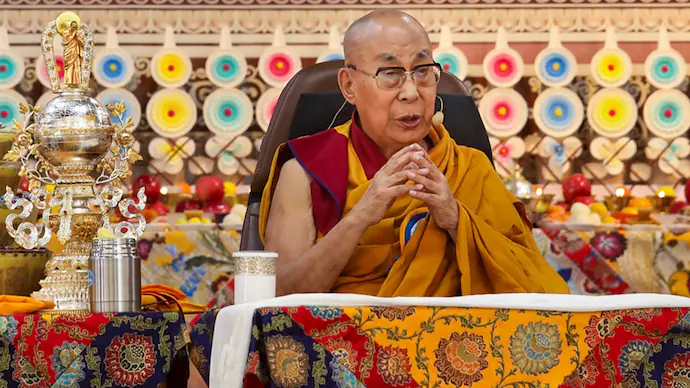
Dharamshala (National Times): In a significant move with global religious and political implications, the exiled Tibetan spiritual leader, the 14th Dalai Lama, has reaffirmed that the Gaden Phodrang Trust, the official office of His Holiness, will hold exclusive authority in selecting his reincarnation, effectively shutting out any Chinese role in the process of appointing the 15th Dalai Lama.
The declaration came through an official statement released on Wednesday, just days ahead of the Dalai Lama’s 90th birthday on July 6, reaffirming his long-standing position that the 600-year-old institution of the Dalai Lama will continue beyond his lifetime, but on his terms.
“Responsibility for recognising the 15th Dalai Lama rests exclusively with members of the Gaden Phodrang Trust,” the statement read. “No one else has any such authority to interfere in this matter.”
The 14th Dalai Lama, a global symbol of non-violence and compassion, added that the recognition process must be guided by traditional methods, including consultations with senior Tibetan Buddhist leaders and “reliable oath-bound Dharma Protectors” who are spiritually tied to the Dalai Lama’s lineage.
“They should carry out the procedures of search and recognition in accordance with past tradition,” he said, clearly indicating that Beijing has no legitimate role in the religious succession process.
A Direct Message to China
This firm reiteration comes amid mounting concerns over China’s increasing attempts to interfere in Tibetan religious matters, including its plans to install its own version of the next Dalai Lama — a move widely viewed by Tibetans as political appropriation of a sacred spiritual tradition.
China has in the past claimed it holds the ultimate authority to approve or reject reincarnations of high-ranking Tibetan lamas under a controversial 2007 regulation, which the Dalai Lama and Tibetan exile leaders have categorically rejected.
By placing full control in the hands of the Tibetan spiritual community in exile, the statement seeks to ensure that the succession remains a spiritual and cultural matter, not a political one.
A Legacy of Resistance and Faith
The 14th Dalai Lama fled Lhasa in 1959 following a failed uprising against Chinese rule. He has since lived in exile in Dharamshala, India, along with thousands of Tibetan refugees. Despite China branding him a separatist, he remains deeply respected globally as a peace advocate, Nobel laureate, and enduring symbol of the Tibetan people’s quest for autonomy and cultural survival.
The timing of the statement, so close to his 90th birthday, is widely seen as a strategic reinforcement of Tibetan autonomy and an effort to prevent any posthumous hijacking of his legacy by Chinese authorities.
As the world watches what could be a defining chapter in the future of Tibetan Buddhism, the Dalai Lama has made it clear: his successor will not be chosen by a state, but by tradition, faith, and the Tibetan people.
