

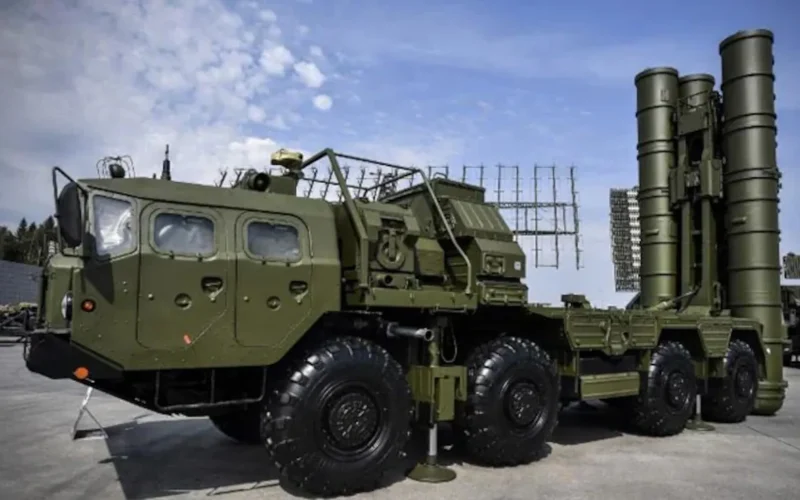
New Delhi (Gurpreet Singh): In a significant move to fortify India’s national security, the Defence Acquisition Council (DAC) on Friday, March 27, 2026, approved the procurement of five additional S-400 Triumf air defence systems and 60 “Ghatak” indigenous stealth combat drones. Chaired by Defence Minister Rajnath Singh, the apex body’s decision draws heavily on the successful performance of existing S-400 batteries during last year’s Operation Sindoor against Pakistan. The new S-400 systems, estimated to cost approximately $6.1 billion (₹63,000 crore), will effectively double India’s long-range surface-to-air missile capability, building upon the original five-system contract signed in 2018.
The S-400 has already proven its strategic worth; during Operation Sindoor in May 2025, the system was credited with intercepting enemy drones and cruise missiles, with the IAF recently documenting a “longest-ever air kill” exceeding a 300 km range. According to official sources, the mere presence of these radars forced Pakistani fighters and AWACS platforms to operate deep within their own territory, severely limiting their offensive coordination. By adding five more units, the Ministry of Defence aims to fulfil Prime Minister Narendra Modi’s 2025 vision of creating a “seamless kinetic and electronic shield” across India’s most vulnerable border regions.
Complementing this defensive shield is the first-ever large-scale order for the “Ghatak” Unmanned Combat Aerial Vehicle (UCAV). Developed by the DRDO, the Ghatak is a sophisticated stealth drone designed for a low radar cross-section and internal weapons carriage. These UCAVs are intended for high-risk deep-strike missions, allowing the IAF to penetrate heavily defended enemy airspace to neutralize radar stations and missile systems without risking pilot lives. This dual approval of advanced Russian-origin tech and cutting-edge indigenous innovation marks a pivotal step in India’s transition toward a modernized, multi-layered aerial warfare strategy.
