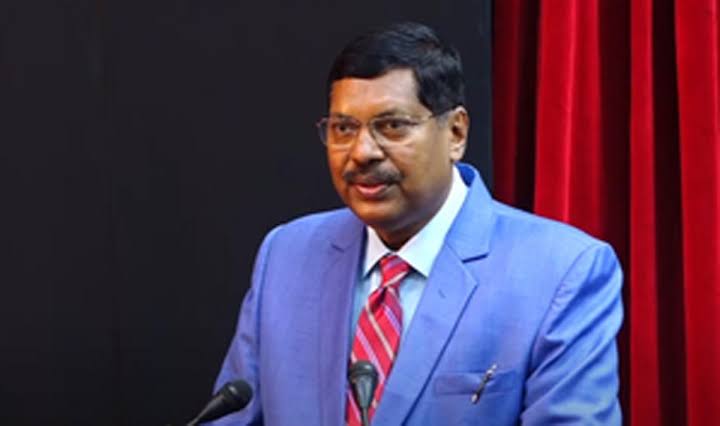
New Delhi, November 16, 2025 — Chief Justice of India BR Gavai on Sunday reiterated his long-held view that the concept of the “creamy layer” should also apply to reservations for Scheduled Castes, a stance that has invited intense debate since he first voiced it in 2024.
Speaking at an event titled “India and the Living Indian Constitution at 75 Years,” the CJI said that children of top-ranking officials cannot be compared with those from economically distressed backgrounds when it comes to accessing reservation benefits.
“I took the view that the creamy layer principle, which was upheld in the Indra Sawhney judgment for Other Backward Classes, should also be made applicable to Scheduled Castes. Though my judgment has been widely criticised, I still hold that view,” he said. Justice Gavai added that judges are “not supposed to justify their judgments,” noting that he is only days away from retirement.
Reflecting on his tenure, the CJI said India has witnessed significant progress in equality and women’s empowerment. He noted that discrimination faced by women is now being forcefully challenged across society.
Justice Gavai also recalled that his first public function after becoming CJI was held in his hometown Amravati in Maharashtra, and the last one before retirement happened to be in Amaravati, Andhra Pradesh — a coincidence he said he cherished.
In 2024, a Bench led by Justice Gavai had observed that states must formulate policies to identify the creamy layer within SC and ST communities and exclude them from reservation benefits, arguing that those with social and economic advantages should not corner opportunities meant for the marginalised.
Emphasising that the Constitution is a “living, evolving document,” the CJI said Dr BR Ambedkar designed it to be flexible, with Article 368 enabling amendments when necessary. He added that Ambedkar’s speeches during the drafting of the Constitution remain essential reading for law students.
Quoting Ambedkar, Gavai said liberty without equality creates dominance of the powerful, while equality without liberty hampers an individual’s drive to progress. The balance of equality, liberty, and fraternity, he stressed, is crucial to achieving social and economic justice.
Reflecting on his own journey from a municipal school in a semi-slum area of Amravati to the country’s highest judicial office, the CJI credited the Constitution for enabling such opportunities. He highlighted that India has had two Presidents from Scheduled Castes and that the current President is a woman from a Scheduled Tribe, illustrating the transformative power of constitutional values.
Justice Gavai concluded that the nation stands firmly on the four pillars of justice, liberty, equality, and fraternity — foundations that will continue guiding India forward.