

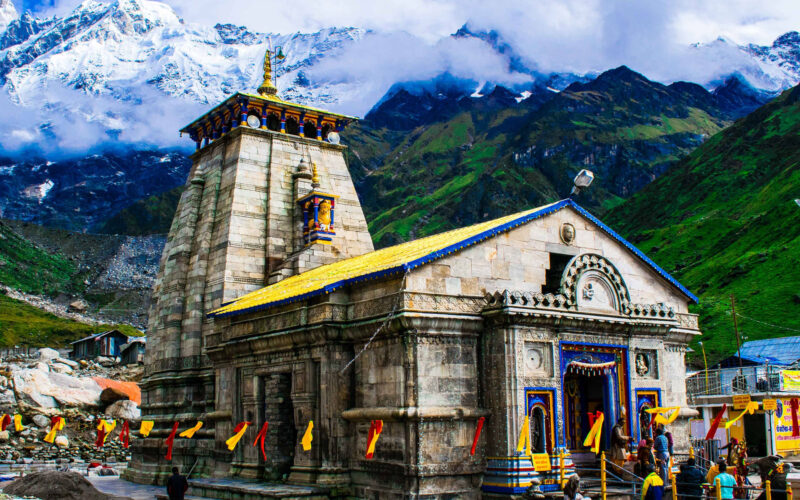
Dehradun, January 26, 2026: The Badrinath-Kedarnath Temple Committee (BKTC) has proposed restricting the entry of non-Hindus at the Char Dham shrines and several other major pilgrimage sites in Uttarakhand, a move that has sparked fresh debate around religious traditions, constitutional values and access to sacred spaces.
BKTC chairman Hemant Dwivedi said that revered shrines such as Badrinath and Kedarnath are not tourist destinations but the highest spiritual centres of Sanatan Dharma. He emphasised that entry into these temples should be governed by long-standing religious traditions rather than being treated as a civil or tourism-related right.
Dwivedi stated that prominent religious leaders and members of the saint community have collectively expressed the view that non-Hindus should not be allowed inside these sacred sites. He said the proposal is rooted in respect for age-old customs and beliefs, adding that the Char Dham are centres of faith and spiritual discipline, not places meant for general sightseeing.
Responding to the development, Uttarakhand Chief Minister Pushkar Singh Dhami said the state government would take an appropriate decision after considering the views of temple committees and religious organisations entrusted with managing pilgrimage centres in Devbhoomi Uttarakhand. His remarks suggest that the government may accord importance to the decisions taken by temple management bodies on the matter.
According to the proposal submitted by the BKTC, as many as 48 temples, kunds and religious locations have been identified where the entry of non-Hindus would be restricted. These include the Badrinath and Kedarnath Dhams, Tungnath, Madhyamaheshwar, Triyuginarayan, the Narsingh Temple in Joshimath, Vishwanath Temple in Guptkashi, Tapt Kund, Brahma Kapal and the Shankaracharya Samadhi, among several other spiritually significant sites associated with the Char Dham circuit.
The proposal is being seen as an effort to preserve the sanctity and traditional character of these pilgrimage centers. At the same time, it is expected to prompt wider discussions on religious access, constitutional principles and the role of tourism in Uttarakhand.
