

Ottawa (Rajeev Sharma): For the first time in more than a century, the Canadian military has developed a theoretical model outlining its response to a possible United States invasion, reflecting heightened diplomatic and strategic tensions between Washington and its NATO allies, according to a report by The Globe and Mail.
The model, described as precautionary and purely hypothetical, details a multi-layered defence strategy by the Canadian Armed Forces in the event of a US military incursion. Senior officials familiar with the plan said it focuses on asymmetric warfare, including drone operations, sabotage and ambush tactics, while also factoring in requests for military assistance from European allies.
Officials emphasised that a US invasion of Canada is highly unlikely, but said the exercise underscores the extent to which bilateral relations have deteriorated over the past year. A recent public opinion poll reportedly found that a majority of Canadians now view the United States as the country’s greatest external threat.
Since returning to office last year, US President Donald Trump has repeatedly made remarks about acquiring Canada, at times referring to it as the “51st state.” In recent months, his administration has also expressed renewed interest in Canada’s Arctic vulnerabilities, citing concerns over foreign adversaries.
Parallel tensions have emerged over Greenland, a territory under Danish sovereignty. The White House has openly stated that control of Greenland is a US national security priority, and officials have not ruled out the use of military force. This has prompted alarm among NATO allies, including France and Germany, which have deployed troops to the Arctic region. Canada is also considering sending forces to Greenland.
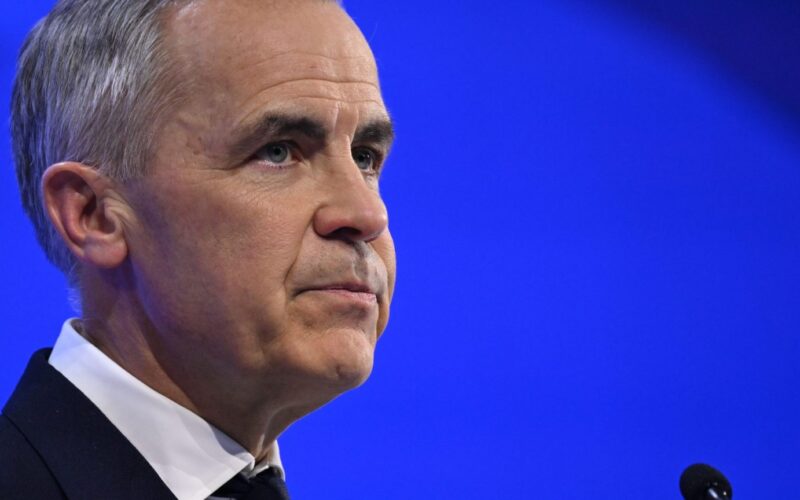
Canadian Prime Minister Mark Carney, speaking in Switzerland on Tuesday, reaffirmed Ottawa’s stance on Arctic sovereignty. “We stand firmly with Greenland and Denmark and fully support their right to determine Greenland’s future,” he said.
According to the report, Canada’s military model assumes that any US incursion would likely originate from the south and involve a rapid seizure of key infrastructure. Given Canada’s limited capacity to counter a conventional attack, the strategy relies on unconventional methods inspired by guerrilla warfare tactics used during the Soviet-Afghan conflict.
One official said the approach is aimed at deterring occupation by imposing significant operational costs on an invading force. In such a scenario, Canada would also seek assistance from allied nuclear powers such as the United Kingdom and France.
Despite the modelling, officials stressed that military-to-military relations between Canada and the US remain functional. The two countries recently conducted a joint NORAD exercise in Greenland.
Retired senior officers have described the idea of a US invasion as unrealistic, but analysts argue that strengthening defensive preparedness acts as a deterrent. Political experts note that proactive planning reduces the likelihood of extreme scenarios materialising.
